
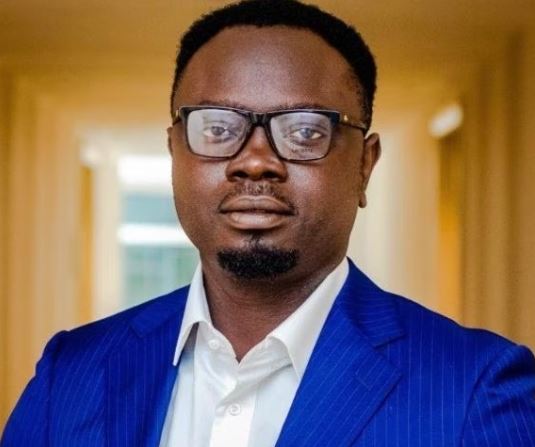
APC has a brighter chance in 2027 — Youth Minister
By Johnbosco Agbakwuru
Comrade Ayodele Wisdom Olawande is the Minister of Youth Development. In this interview, he highlights President Bola Tinubu’s administration, focusing on economic reforms, infrastructure development and youth empowerment. He says that despite the hardship from the ongoing reforms, the administration aims to create a sustainable economy and provide jobs. On the 2027 elections, he says the All Progressives Congress (APC) has a brighter chance if it continues to deliver on its promises. Excerpts:
President Tinubu is three years in office. What is your assessment of his administration?
Thank you very much. That is a very good question. Priorities depend on personal perspective. Assessing an administration does not only depend on talking points. Everyone knows the president came into power at a very difficult time for Nigeria. I remember what the Emir of Kano said: if anyone campaigns and tells you things will be easy, it is a lie. Nigeria needed someone dedicated, committed, energetic and of strong character to move the country forward.
This administration has taken bold steps and decisions to fix long-standing economic problems. The administration has chosen to make deliberate, sustained changes — not temporary measures or random sharing formulas — but to ensure necessary systems are put in place. Any administration that wants the good of Nigeria will seek every opportunity to create a prosperous life for the people, especially for young people. We are seeing improvements in several areas.
Infrastructure development is visible. Let us use Abuja as a template, because it is the FCT. If you compare Abuja three or four years ago to today, the infrastructure improvements demonstrate the president’s commitment. This is not limited to Abuja: we have the coastal road, the Lagos–Calabar coastal highway, and many other projects. The government has invested heavily in infrastructure.
Some people say they don’t see the benefits of removing the fuel subsidy; I laugh at that — the first place to see the benefit is among young people. For three uninterrupted years, no student has been out of school because of ASUU strike, and that is a major achievement. Previously, there was little investment in youth. For the first time we are seeing substantial investment in young people. Investment in energy is key: we are moving from the old NNPC model toward a more diversified energy approach, including CNG. Energy must be developed from what we have, not only from what we are seeking.
On youth support, much has been done but there is more to do. We are not yet where we want to be. There are still actions to take and systems to establish, but we started from somewhere. The government is focused. The president is one of the most focused leaders we’ve had. He is committed to building a sustainable country where young Nigerians can have a place to call home. That is the major part of what the president is doing — building a stronger economy for future generations.
But some people argue his policies and reforms have brought hardship to citizens. What is your take?
Reforms often come with pain. Childbirth is hard, yet necessary for the good that follows. No reform that produces meaningful, long-term benefits is painless. We must correct problems that have existed for decades, and that requires courage and tenacity. We cannot avoid difficult times.
What matters is that government continues to provide support to citizens to ease the adjustment to economic reforms. The goal is a sustainable, productive economy that creates real jobs — not superficial programs that only offer the appearance of employment. Many young people have left the country; you cannot blame them. For decades — and I mean forty years — people did not feel government presence. Leadership was often rulership, not servant leadership. These reforms are not intended to perpetuate hardship but to improve living conditions for Nigerians so our children and grandchildren will have better opportunities. We are trying to reshape the country for future prosperity.
With the hardship Nigerians are experiencing now, do you think the APC has a chance in 2027?
Elections are decided by the people. Democracy is of the people, by the people, and for the people. I believe we are getting our message across. Nigerians will consider the challenges we faced on arrival, what we found on the ground, and what we are doing now. They will judge the visibility and the progress. They should weigh constructive arguments, not bitterness or a mere desire for power.
APC has a better, brighter chance if it continues to deliver on its promises. If the president is allowed, by the grace of God, to secure a second term, it could deliver more direct benefits for many Nigerians. The party’s prospects could extend beyond 2027 because youth participation is growing. The president has given young people a chance to learn and benefit from reforms, and by 2031 we can expect an even stronger pool of leaders.
As the Minister of Youth Development, do you think the youth have enjoyed the impacts of the current government?
Yes. This is the first administration in our history — and people can criticize this — that has clearly prioritized young people. That is why there is pressure on institutions like NYSC: no student has been out of school for three years; academic calendars are running and ASUU is not striking. That alone is a major achievement for youth development.
NELFUND is one of the biggest programs for youth, and despite challenges this government has invested more in skills development. The TVS program is changing curricula and skills training. We’ve also increased digital training through partnerships with many NGOs and established the Nigerian Youth Academy for digital capacity building. Entrepreneurship access has improved and the government has worked to provide funding and other youth empowerment programs.
As the Ministry of Youth, in collaboration with other MDAs, we have rolled out initiatives to end tokenism. The era of token gestures is over. Our focus is to create an enabling environment and real opportunities for Nigerian youth. We still need more: we want fewer young people to travel abroad out of desperation and more to have stable incomes at home. But we are making progress in empowering and protecting young people productively.
Can you give the statistic of the number of youths employed since this administration began?
Employment statistics are complex. We do not want to push everyone into civil service jobs. Youths are divided into formal and informal sectors. Government cannot employ everyone. Many job gains come through public–private partnerships (PPPs). If you visit the coastal road projects or factories like Dangote’s, you will see many young people employed through PPPs.
Our approach focuses on private-sector–driven employment and entrepreneurship. Agencies like SMEDAN and NASENI support small businesses and innovation. The World Bank and other partners are also engaged on youth employment. NYSC reform aims to make the one-year service year productive so graduates leave with skills and marketable experience, not idle time. So, employment measurement must include private-sector and PPP outcomes, not only government hires.
How would you score the administration on youth empowerment?
Young people are receiving more attention today than before. Empowerment is no longer just handing out tailoring kits. We are focusing on productive empowerment: skill development and creating linkages with the private sector. Our ministry’s mantra is that a youth should have at least two skills. We implement this through multiple platforms — MTT, AIR, house-to-house outreach — and by working closely with state governments.
What is the relationship between your ministry and the National Directorate of Employment and the Ministry of Labour?
We are collaborating closely. We are reviewing their data and employment policies to align them with the president’s reforms. The aim is to improve their engagement levels, sharpen employment statistics, and ensure a level playing field so every young person can benefit from government programs.
As the general elections draw nearer, what is your advice to the youth?
My advice is simple: get your voter card and participate in the democratic process. Avoid violent actions, hate speech and misinformation. Do your research; study the issues and the candidates. Don’t be swayed by empty promises or tokenism. Know what the National Assembly should do, and demand accountability.
Understand the issues, deliberate on needed constitutional changes, and support efforts like local government autonomy so local leaders can deliver basic services. Nigeria belongs to all of us; no one will be sent away. Young people must play a positive role in shaping our country’s future. I am confident in our youth — they are resourceful, resilient, and capable of leading with guidance and wisdom.
The post APC has a brighter chance in 2027 — Youth Minister appeared first on Vanguard News.