
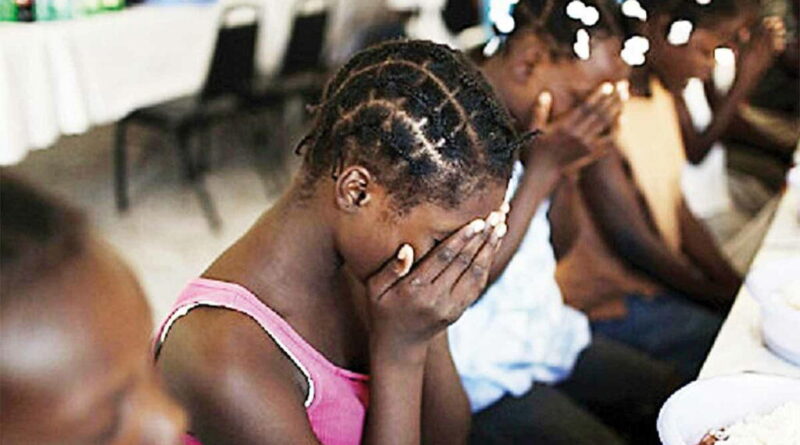
756 cases in 7 months: Experts seek tougher actions against Nigeria’s sexual violence
By Favour Ulebor
Despite existing laws, awareness campaigns and interventions by government and non-governmental organisations, Sexual and Gender-Based Violence (SGBV) remains a major concern in Nigeria, with 756 cases recorded by the National Agency for the Prohibition of Trafficking in Persons (NAPTIP) between January and July 2026.
According to recent NAPTIP data, 549 cases were investigated, 64 arrests were made, two cases were won, and 183 victims were rescued. Since inception, the agency has recorded 5,255 reported cases, 2,887 investigations, 605 arrests, 40 successful cases and 2,592 rescued victims.
The figures come amid growing concern over violence against women, girls and other vulnerable people across the country.
Data from the 2024 Nigeria Demographic and Health Survey (NDHS) showed that 21 per cent of Nigerian women aged 15 to 49 had experienced physical or sexual violence.
Yet, only 24 per cent of survivors sought help to stop the violence, while 18 per cent told someone but did not seek help. About 58 per cent neither sought help nor told anyone.
The NDHS also found that 22 per cent of women and 16 per cent of men believed a husband was justified in beating his wife under certain circumstances.
Similarly, the Womanity Index 2025 Edition by Invictus Africa found that domestic or intimate partner violence accounted for 51 per cent of reported gender-based violence cases. It also showed that 59 per cent of Nigerians had either experienced gender-based violence themselves or knew someone who had.
According to the report, 76 per cent of incidents occurred in the home, compared with 29 per cent in public places, 25 per cent in schools and 20 per cent in workplaces. Survivors were more likely to seek help from family, friends, religious leaders and traditional leaders than formal institutions, with trust playing a major role.
Poverty, Culture and Insecurity Fuel SGBV — NAPTIP
Explaining the factors behind the continued prevalence of SGBV, NAPTIP Head of Press and Public Relations, Vincent Adekoya, said the causes vary across geopolitical zones, tribal settings and communities.
He identified poverty, harmful traditional norms, insecurity, displacement, climate change and technology as major factors exposing women and children to violence.
Adekoya said the poor economic circumstances of some families force them to live in congested and unsafe environments, increasing their exposure to abuse.
“Due to the low economic base of some families, they are forced to live in congested and uninhabitable homes in shanties with increased abuses,” he said.
He also pointed to cultural practices that normalise violence and reinforce unequal gender roles.
“There are some existing cultural norms in some communities where the issues of SGBV are seen as part of the culture. Such traditions play up gender roles and fuel SGBV in the process,” he said.
On insecurity and displacement, Adekoya said people who lose their homes and livelihoods become increasingly vulnerable.
“Because people are displaced and their means of livelihood are affected, they become very vulnerable and may not be able to send their children to school or even feed them. This situation exposes them to abuses,” he said.
He added that climate change was also forcing people to leave their homes in search of livelihoods, creating further vulnerabilities.
Technology Creates New Forms of Abuse
Technology, Adekoya said, has also created new avenues for perpetrators.
“Perpetrators now use digital space and technology to groom their victims and later prey on them. They make friends with innocent children online, groom them for child pornography, revenge porn, and sextortion,” he said.
The growing use of digital platforms, he noted, means that children can be targeted even within spaces where parents may assume they are safe.
NAPTIP Calls for Community Action
On measures to reduce SGBV, Adekoya said NAPTIP had continued to implement the Violence Against Persons Prohibition (VAPP) Act.
He called for harmful traditions to be reviewed and for community leaders, government institutions and non-state actors to play a more active role.
“The Community Leaders also need to be actively involved in countering SGBV in communities by working closely with various Government Institutions and organs of Government responsible for implementing measures aimed at countering SGBV,” he said.
He also called for massive grassroots enlightenment to help parents understand how to protect their children.
Adekoya disclosed that NAPTIP had inaugurated Anti-Trafficking and Violence Against Persons Vanguard groups in primary and post-primary institutions across the country. The initiative, he said, would help children identify warning signs and develop the confidence to speak out.
Victims Need Protection, Not Blame
Adekoya stressed that survivors should not be blamed for the violence committed against them.
He said frontline respondents must adopt a victim-centred approach covering rescue, counselling, rehabilitation, empowerment, follow-up and reintegration.
“The victims are not the criminals; rather, it is the perpetrators that are the criminals,” he said.
“Society must learn to accommodate the victim and not blame them for what befell them. They must be supported to overcome the trauma and continue their normal life.”
‘What We See Is Only a Fraction’
For SGBV survivor, Social Impact Advocate and Project Lead at Centre for Teens Health and Development (Centre4Teens), Morenikejimi Olaniran, the reported figures may represent only a fraction of the problem.
Through her work with adolescents and communities, Olaniran said she had encountered young people dealing with sexual abuse, harassment, exploitation, neglect, intimate partner violence and emotional abuse—sometimes without even recognising their experiences as abuse.
She identified the normalisation of violence as a major concern, particularly when perpetrators are people known to or trusted by young people.
“Sexual and Gender-Based Violence remains deeply prevalent, although I believe what we see is only a fraction of the reality,” she said.
“Some young people grow up hearing that certain behaviours are simply part of life, particularly when the perpetrator is someone they know, trust, or depend on.”
Abuse Often Happens Where Children Feel Safe
Olaniran said sexual abuse, rape, sexual harassment, exploitation, intimate partner violence, physical, emotional and psychological abuse, as well as harmful practices, continue to affect girls and young women.
Perpetrators, she noted, are not always strangers.
“Sometimes violence happens within spaces where a child should feel safest; at home, in schools, in church, mosque, within communities, or through relationships with people they trust,” she said.
She identified age, poverty, disability, displacement, limited access to information, unequal power relationships and dependence on adults for basic needs as factors that can increase vulnerability.
Drawing from her experience as a survivor and her work with girls, Olaniran said lack of knowledge could also leave children more vulnerable.
“A child who has never been taught about boundaries, consent, safe and unsafe touch, or where to seek help may struggle to recognise abuse or report it,” she said.
Fear Keeps Many Survivors Silent
Fear, stigma, victim-blaming and a lack of confidence in the justice and support systems, Olaniran said, remain major barriers to reporting.
Some families, she added, prioritise their reputation over the safety of the child.
“Reporting violence is only the first step. Survivors and their families need to know that there will be a safe, confidential, survivor-centred response afterwards,” she said.
She called for a system in which survivors receive safety, dignity, confidentiality, psychosocial support, medical care, legal assistance and appropriate accountability.
Trauma Does Not End with the Incident
The impact of SGBV, Olaniran said, can continue long after the incident, affecting a survivor’s mental health, relationships, education, self-worth and ability to trust others.
Young survivors may experience fear, shame, anxiety, isolation, difficulty concentrating and withdrawal from school and social activities.
“When violence happens during childhood or adolescence, it can affect how a young person understands themselves and the world around them,” she said.
She stressed that survivors need long-term psychosocial support and that intervention should not end with reporting or prosecution.
Prevention Must Begin Early
Olaniran urged the government to strengthen child protection systems, improve survivor-centred services and ensure that existing laws are implemented.
She also called for trained professionals in schools who can identify signs of abuse, respond appropriately to disclosures and understand referral pathways.
Communities, she said, must challenge harmful norms that excuse perpetrators and silence survivors.
She further advocated a nationally coordinated child and adolescent protection system covering prevention, early identification, reporting, referral, psychosocial support, healthcare and access to justice.
“We cannot afford to turn a blind eye or say, ‘it is not my business.’ Every child deserves protection, regardless of whose child they are. If you see something, say something,” Olaniran said.
“Ultimately, preventing SGBV is not only about responding when violence happens. It is about creating environments where children are believed, protected, educated about their rights, supported to speak, and surrounded by adults and institutions that take their safety seriously.”
Laws Exist, but Implementation Is Key
Founder and Executive Director of Grassroots Centre for Rights and Civic Orientation (GRACO), Armsfree Ajanaku, said SGBV must also be treated as a human rights and accountability issue.
According to Ajanaku, Nigeria is bound by international and regional instruments requiring the government to prevent, investigate and punish violence against women and girls.
These include the Universal Declaration of Human Rights, Convention on the Elimination of All Forms of Discrimination Against Women (CEDAW), UN Declaration on the Elimination of Violence Against Women, Beijing Declaration and Platform for Action, Maputo Protocol and Sustainable Development Goals.
Ajanaku argued that cultural, traditional or religious beliefs should not be used to excuse violence. The major challenge, he said, was stronger implementation and accountability.
Media Can Help Change Harmful Norms
Civil Society and Community Mobilisation Specialist of the ESGBV Programme at International IDEA, Mrs Wynyfred Achu-Egbuson, said the media had an important role to play in changing harmful social norms around SGBV.
She said the four-year ESGBV Programme, supported by the European Union, was designed to work with key stakeholders towards ending SGBV in Nigeria.
The programme focuses on three areas: legislation and policies; access to essential services for survivors; and strengthening civil society and changing social norms.
Achu-Egbuson said the intervention includes expanding access to Sexual Assault Referral Centres and ensuring that primary health centres can provide services to survivors.
She said the SGBV Media Corps forms part of the social-norms intervention and is not limited to journalists. It also includes influencers, presenters, community respondents and other media practitioners.
The initiative, she explained, is designed to address harmful media practices such as victim-blaming, sensationalism, breaches of privacy, and the use of language or images that could expose or further traumatise survivors.
According to her, media practitioners have the power to influence behaviour, change cultural norms and create meaningful conversations around SGBV.
She stressed that the engagement would continue beyond the training throughout the four-year programme, with media practitioners expected to use their platforms to promote positive norms and support efforts to end SGBV in Nigeria.
The message running through the data and the experiences of those working with survivors is stark: laws and interventions exist, but violence persists in homes, schools, communities and increasingly in digital spaces. For many survivors, the hardest step is not only escaping the violence but finding a system—and a society—that believes them, protects them and helps them rebuild their lives.
Vanguard News
The post 756 cases in 7 months: Experts seek tougher actions against Nigeria’s sexual violence appeared first on Vanguard News.