
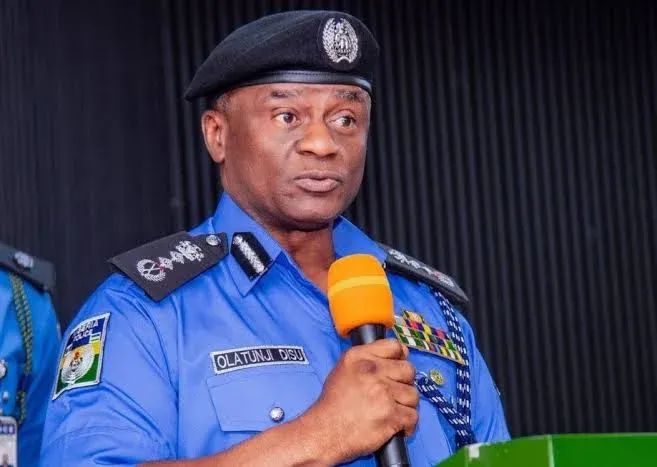
2027: Police will not be used as Political Tool – IGP
By Edwin Philip
Abuja -The Inspector-General of Police (IGP) Olatunji Dusu has assured Nigerians that the Nigeria Police Force (NPF) will not serve as a political tool ahead of the 2027 general elections.
Dusu was speaking on Tuesday at the day 2 of 2027 edition of Media Development Conference, organised by Centre for Journalism Innovation and Development (CJID) taking place at the Abuja Continental Hotel, Dusu emphasised that policing is anchored on public trust and accountability rather than force.
Expressing commitments ahead of the 2027 elections, the IGP stated that the Nigeria Police Force will be guided by professionalism, neutrality, and accountability to all Nigerians, political parties, and the law.
He said “Any police officer found to be partisan, to have taken sides, or to have aided any candidate or the party will face disciplinary action under the force’s code of conduct”.
Addressing grievances surrounding the alleged misuse of the Cybercrime Law against journalists, Dusu pledged that the police under his leadership will not be a willing tool for oppression in the hands of politically motivated actors.
He warned that elections can now be disrupted through the information environment—via fake videos, doctored audio, coordinated social media falsehoods, and fabricated stories capable of triggering real-world violence.
Responding during the panel session which was on ‘People centred public safety and State policing in Nigeria’, the Nigerian Police boss, said that Nigerians should not be afraid of the State Governors misusing the State policing system, he assured that safeguards are being developed to ensure state police structures are not hijacked for personal or political interests, including provisions for federal intervention if situations get out of hand.
IGP noted that the National Assembly, and the nation are working to design a framework suited specifically to Nigeria’s realities rather than copying foreign models, emphasising that police training will be standardised across the country so that officers in states such as Lagos and Kano undergo uniform training standards regardless of differing local functions.
On the enforcement of the Cybercrime Act, the IGP disclosed that the force has held two symposiums since his assumption of office to examine cybercrime laws and digital offenses. He urged citizens and media practitioners to familiarize themselves with the provisions of the Act, noting that actions often perceived as minor online can constitute offenses under the law.
He added that personnel posted to the NPF cyber section are being trained and equipped to tackle emerging digital crimes.
IGP Dusu affirmed that journalism is not a crime and described journalists as essential partners in progress and development who hold governments accountable. While acknowledging that press freedom in Nigeria is relatively better than in some neighbouring countries in the Sahel region, he noted there is still room for improvement on both sides.
Recalling a research paper he wrote on the need for journalists to accompany police during serious crime investigations during a management course at the Staff College in Jos, IGP Dusu stressed that joint fieldwork builds synergy and helps the media understand the challenges police face before making arrests.
However, he pointed to an incident from his time as Commander of the Rapid Response Squad in Lagos—when a kidnapped Lagos State Accountant General was being rescued where premature reporting that the suspect had been arrested tipped off the kidnappers’ associates who were demanding ransom, escalating the situation.
He cited this as an example of why discretion, relationship-building, and national interest matter at sensitive moments.
Sharing another experience from his Rapid Response Squad days, he recounted how officers assisting a stranded motorist reacted aggressively when someone appeared with a camera, reflecting officers’ anxieties over past job losses linked to viral footage.
Nevertheless, he stressed that police officers are being sensitized to protect journalists covering events, respect their expectations, and avoid pushing them out of areas of jurisdiction so both sides can perform their duties.
IGP Dusu announced that Commissioners of Police have been directed to hold regular parleys with the media in their areas of responsibility, alongside plans for joint lectures and pre-election training in Abuja and other states to improve election coverage and introduce journalists to command and unit officers ahead of the 2027 polls.
He expressed support for the conference’s deliberations and hoped the exchange of ideas would yield insights beneficial to Nigeria’s media ecosystem.
CJID Board Chairman Commends IGP, Calls for Trust and Synergy
In a goodwill message on behalf of the Board of Directors, management, staff, and participants of the Centre for Journalism Innovation and Development the Chairman of the CJID Board of Trustees, Prof. Umaru Pate, thanked IGP Dusu for his insightful address and welcomed the assurance that the police will remain professional, accountable, and law-abiding.
Prof. Pate described trust as the essential currency that should govern relations between Nigerians and the police, as well as between journalists and the police, warning that a lack of trust breeds suspicion and undermines legitimacy.
He noted that tension often arises because journalists rush to reduce public uncertainty by publishing information quickly, whereas the police treat information as sensitive investigative material to be released carefully.
Advocating greater dialogue and mutual education on each side’s responsibilities echoing the IGP’s Staff College paper Prof. Pate said deeper engagement reduces anxiety and fosters responsibility for Nigeria’s survival. He pledged the Nigerian media’s support for democracy ahead of the 2027 elections and commended the sacrifices made daily by police personnel in the line of duty.
The post 2027: Police will not be used as Political Tool – IGP appeared first on Vanguard News.