
Trash to Cash: How Nigeria’s economic pinch turns many families to waste collectors
By Elizabeth Adegbesan
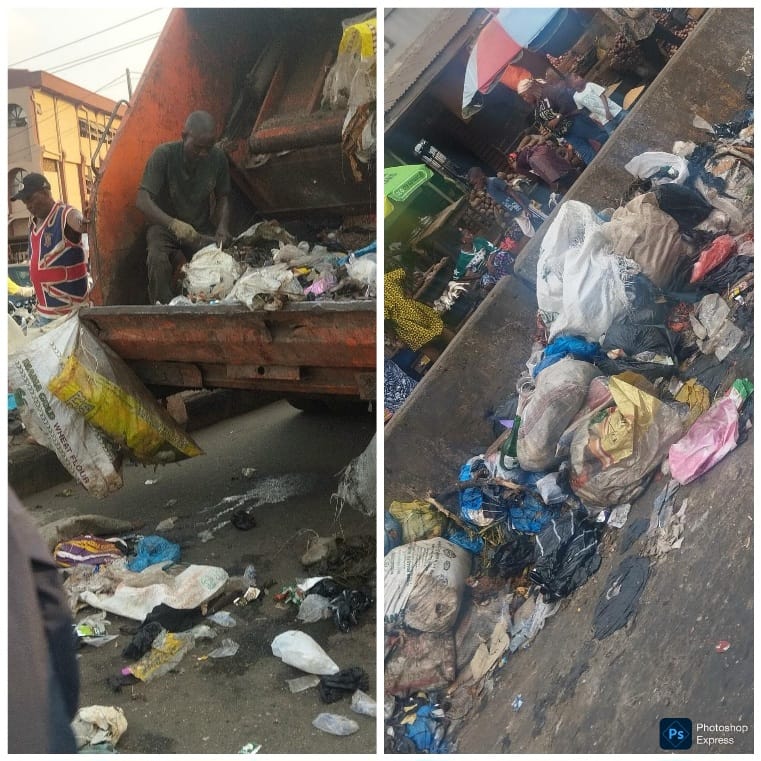
What used to be a job for scavengers has now become a crowded race for survival. As the cost of living climbs, thousands of ordinary citizens are turning to garbage picking to feed their families.
Read Also: Oyo forest ambush: Sunday Igboho confirms recovery of injured ‘Iru Ekun’ operatives
A new way to survive
The economic landscape has changed drastically over the last few years. High inflation and rising food prices mean that a regular paycheck is not enough anymore.
For those without steady jobs, the situation is even harder.
Economy&Lifestyle discovered that this pressure has turned city streets, dumpsites, and event centers into valuable hunting grounds.
Plastic bottles and aluminum cans are no longer seen as litter. They are now the new money.
Mrs. Amina Haruna, a used clothes seller said: “I used to sell clothes in the market, but prices of bales of used clothes became too high for me to buy.
“One day, a neighbor showed me how much she made from selling plastic bottles to a recycling center.
I decided to try it. Today, this trash is the only reason my children have food on their table.”
Mrs. Haruna is not alone. In major cities across the country, a diverse group of people now combs the streets.
You can see young graduates, elderly widows, and even parents with small children searching through gutters and waste bins.
The recycling chain
Findings by Economy&Lifestyle revealed that the process is simple although physically exhausting.
Pickers gather the waste from streets, parks, and trash heaps. They sort the items into categories: PET bottles, aluminum beer and soda cans, and paper cartons.
Once their bags are full, they trek to local collection hubs. These hubs weigh the materials and pay the pickers based on the weight.
Mr. Abdul Danjuma, who runs a busy recycling depot, told Economy&Lifestyle that he has witnessed a massive surge in the number of people bringing in waste.
“Two years ago, I mostly bought pet bottles, cans and cartons from informal cart pushers.
“Now, I see grandmothers, young boys, and people who look like they used to have good office jobs bring these plastics to me.
“The volume of waste coming in has doubled because everyone is desperate for cash.
“We pay them directly, and for many, it is the only cash they will see all day.”
Danjuma said he pays N100 per kilogram of pet bottle can or paper.
The price according to him differs across the country.
While this trend highlights deep economic struggles, it has an unexpected bright side. The environment is becoming much cleaner.
Before this boom, plastic bottles blocked drainage systems, leading to severe flooding during the rainy season.
Now, those bottles rarely touch the ground before someone scoops them up.
Environmental groups are glad to see less waste, but they worry about the health of the people picking it.
Most pickers work without gloves, boots, or masks.
They face cuts from broken glass, skin infections, and exposure to harmful bacteria.
“It is a bittersweet situation,” Tolani Jegede, an environmental activist, said.
“On one hand, plastic pollution is dropping, which is good for our environment. On the other hand, it breaks my heart to see human beings digging through hazardous waste just to buy a loaf of bread.
“They need better prices for their hard work and proper protective gear.”
Despite the health risks and the social stigma of digging through trash, the pickers remain resilient.
They view their work as an honest hustle in a tough world.
For Mrs. Haruna, the daily grind continues. Her hands are rough from handling plastic and metal, but her spirit is unbroken. She intends to keep going as long as the recycling centers keep buying.
“Some people look down on us when they see us digging in the rubbish. But I do not feel shame. I am not stealing. I am cleaning the city, and I am feeding my family. That is something to be proud of,” she said.
Vanguard News
The post Trash to Cash: How Nigeria’s economic pinch turns many families to waste collectors appeared first on Vanguard News.