
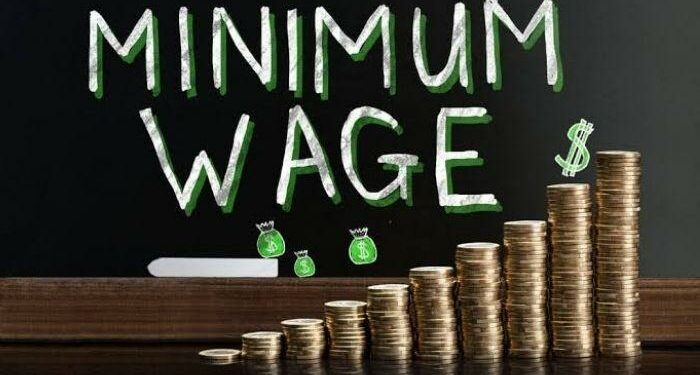
Towards a realistic, sustainable minimum wage
The Federal Government is right to reopen the minimum-wage question, because no wage can be called fair if it is continually outrun by inflation and the rising cost of survival. The N70,000 minimum wage was agreed in 2024 at the outset of President Bola Tinubu’s economic reforms. Nigerians were asked to absorb painful shocks in the hope of a more stable future.
Two years on, that hope has been strained by the harsh realities of a reform programme that has yet to translate into broad relief for households. With food, transport, rent, medicine and school costs climbing relentlessly, the fixed-wage class and ordinary Nigerians have been left to carry the burden of adjustment almost alone.
The hardship imposed on ordinary Nigerians has been severe and visible. Fuel-subsidy removal pushed transport costs sharply upward, while exchange-rate volatility fed into the prices of food, drugs and imported essentials. Public servants, teachers, junior workers and private-sector employees on fixed salaries have watched their incomes lose value long before payday even arrives.
In many homes, families have had to reduce meals, withdraw children from better schools, postpone medical care and abandon modest savings simply to survive. That is the true context in which a minimum-wage review becomes not merely desirable but unavoidable.
The Tinubu administration did roll out palliatives to soften the blow. These included conditional cash transfers, compressed-natural-gas buses, grains and fertiliser interventions, food-distribution efforts, student-loan promises, MSME support schemes, business loans and other social-intervention packages.
Yet for most citizens, the measures were either too small, too delayed or too poorly coordinated to make a meaningful difference. In practice, they barely dented mass suffering. Worse still, the distribution architecture often appeared vulnerable to capture by insiders, political loyalists and well-connected ruling-party figures, leaving the broader public unconvinced that relief was reaching those most in need.
That is why the proposed review is necessary. A national minimum wage should not be treated as a ceremonial figure or a political trophy; it must be a living wage that preserves dignity and reflects present realities. In negotiating a new wage, government and labour should look beyond money alone.
They must examine the cost of living in a disciplined, data-driven way, so the wage is tied to what workers actually need to survive. They must also consider fiscal sustainability, because a figure that states cannot pay will soon degenerate into arrears and fresh labour disputes. Furthermore, they must factor in productivity and value, because wages must be matched by improved public-service delivery, decent work standards and an economy that rewards effort with real purchasing power.
A fitting national minimum wage must therefore restore confidence, protect dignity and deliver value that ordinary Nigerians can feel in their daily lives.
The post Towards a realistic, sustainable minimum wage appeared first on Vanguard News.