
Tinubu’s Anniversary: Judiciary/Rule of Law – No excuses to fail, but…
By Ikechukwu Nnochiri
Before assuming office as Nigeria’s 16th President on May 29, 2023, Bola Tinubu had identified judicial reform as a cornerstone of economic growth and investment in his manifesto, pledging that such progress would be underpinned by the rule of law.
Read Also: Tinubu’s 3rd Anniversary: Leaders who failed spectacularly to keep their promise
“Our policies will be based on four pillars:
Judicial Independence and Integrity
We will institute far-reaching reforms ensuring the financial independence, impartiality, effectiveness and, most of all, the integrity of the judicial branch of government,” the Renewed Hope Manifesto read.
It was therefore not surprising that the first bill President Tinubu signed upon taking the oath of office was titled: “Constitution of the Federal Republic of Nigeria, 1999 (Fifth Alteration) (No. 37) Bill, 2023.”
The law stamped a uniform retirement age for judicial officers.
It extended the retirement age of high court judges and others from 65 to 70 years, bringing it in line with that of Justices of the Appeal and Supreme Courts.
The legislation also ensured uniformity in the pension rights of judicial officers of “superior courts of record” specified in section 6(5) of the 1999 constitution (as amended).
Remarkably, former President Muhammadu Buhari had dragged his feet on the bill which the National Assembly had, on May 2, 2023, directed its clerk, Amos Ojo, to transmit to him for assent.
The erstwhile Attorney-General of the Federation and Minister of Justice, Abubakar Malami, SAN, had in a memo dated May 23, 2023, advised President Buhari to decline assent to the bill.
He had argued that the bill appeared “far-reaching, unduly wide, and ambiguous”, saying it made no “justification” for the extension of retirement age and benefits for judges.
Part of Malami’s point was that approval of the bill could also lead to agitation for a further extension of the retirement age of justices of the Supreme Court and Court of Appeal.
Meanwhile, shortly after his first presidential executive bill, President Tinubu, on August 9, 2024, signed into law Nigeria’s Judicial Office Holders (Salaries and Allowances, etc.) Bill, 2024.
He had transmitted the bill to the National Assembly on March 19, 2024, having earlier assured a delegation from the Nigerian Bar Association (NBA) that visited the State House in August 2023 that the remuneration of judges would be reviewed as part of efforts to tackle corruption in the judiciary.
Before this point, salaries of judicial officers in the country had remained unchanged for 16 years.
Subsequently, President Tinubu wrote to the National Assembly for an amendment of both the Federal High Court Act and the Court of Appeal Act.
He specifically sought an amendment to increase the statutory number of justices of the Federal High Court from 70 to 90.
He also sought an amendment to the Court of Appeal Act to increase the number of Court of Appeal Justices from 70 to 110.
Section 1(2) of the Federal High Court Act, Cap. F12, Laws of the Federation of Nigeria, 2004, originally provided for a maximum of 50 judges for the court, which has expansive jurisdiction and an enormous workload.
It was therefore a no-brainer that the proposed amendments would strengthen the institutional capacity, efficiency, and effectiveness of both the trial court and the appellate court.
On the Federal High Court amendment proposal, President Tinubu, in his letter to the National Assembly, anchored his decision on the need to quicken the justice delivery mechanism.
Concerning the Court of Appeal, he said the amendment would further restructure provisions relating to the ranking of justices of the court, especially the ranking of the President of the Court and the determination of seniority among justices.
It was President Tinubu’s view that the proposed amendment would lead to the modernisation of the court’s proceedings through the introduction of virtual hearings.
“The bill provides for the conduct of proceedings of the Court of Appeal through electronic and audio means, and the establishment of an Alternative Dispute Resolution Centre (ADRC).
“The Court of Appeal bill seeks to establish an Alternative Dispute Resolution Centre within the Court of Appeal, where appellate matters may be referred for settlement,” he added.
He said the amendments sought were timely and necessary, as they would effectively address the growing demands on the appellate justice system and reduce delays in the determination of cases.
While the House of Representatives passed the bill in March 2024, the Senate followed suit in June 2024.
In his first in-person address to judges across the federation on November 17, 2025, at the National Judicial Institute (NJI) in Abuja, President Tinubu insisted the judiciary must take decisive action to tackle concerns about its integrity, warning that justice must never be for sale.
He lamented that citizens had not only expressed frustration over delays in the determination of cases, but also harboured anxiety about the lack of access to justice.
Even though former President Muhammadu Buhari signed the Fifth Alteration Bill 2023 (No. 9) into law — granting financial independence to State Houses of Assembly and State Judiciaries as part of 16 constitutional amendment bills transmitted by the National Assembly — President Tinubu raised the bar.
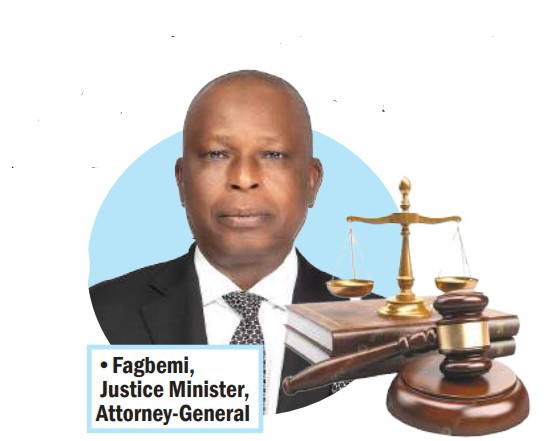
Following a suit he initiated through the office of the Attorney-General of the Federation and Minister of Justice, the Supreme Court, on July 11, 2024, delivered a landmark judgment that granted financial autonomy to the 774 Local Government Areas (LGAs) in the country.
In a unanimous decision by a seven-member panel of justices, the apex court barred governors of the 36 states of the federation from receiving, withholding, tampering with, or utilizing funds that stand to the credit of the local government councils.
Even though implementing the judgment remained challenging, the legal pronouncement provided a lifeline to strengthen local government administration across the federation.
Similarly, on November 25, 2025, President Tinubu took steps to initiate far-reaching reforms that will nearly overhaul the regulation of legal practice in the country.
The proposed legislation, titled the Legal Practitioners Bill 2025, which he transmitted to the Senate, seeks to repeal and re-enact the Legal Practitioners Act, Cap L11, Laws of the Federation of Nigeria 2004 (originally enacted in 1962).
Aside from seeking to strengthen professional discipline by improving mechanisms for dealing with misconduct, the Bill introduced clearer licensing requirements not only to standardise who is authorised to practise law in Nigeria, but also to check the excesses of fake lawyers.
In his letter to the Senate, President Tinubu maintained that the extant regulatory structure had become outdated and incapable of responding to the evolving demands on legal practice at home and abroad.
Referencing the need for a full legislative reset to ensure accountability and restore public trust in the justice system, the draft legislation floated the most sweeping regulatory changes the Bar has witnessed in more than six decades.
The Bill passed its first reading in the Senate on November 25, 2025 and proceeded to the second reading on December 3, 2025.
The Senate subsequently referred the Bill to its Committee on Judiciary, Human Rights and Legal Matters, which held a public hearing on December 18, 2025.
On the administration of justice, the Supreme Court — after a long interval — finally reached its full complement of 21 justices under Section 230(2)(b) of the 1999 Constitution (as amended) following the swearing-in of Justice Joseph Oyewole on February 25.
The Chief Justice of Nigeria, Justice Kudirat Kekere-Ekun, had on February 18 also sworn in 14 judges to the bench of the Federal High Court.
Plans are already underway to appoint 12 new Justices of the Court of Appeal, all of whom have been cleared by the NJC.
Notwithstanding the aforementioned reform efforts, expectations remain high regarding certain aspects of Tinubu’s manifesto that have yet to be implemented.
One of them includes his pledge to review the mandate and composition of the NJC “to make it tougher and more effective in dealing with corruption, malpractice and incompetence in the administration of justice.”
He had proposed that the mandate of the NJC be limited to Federal Courts.
Tinubu had also promised to create specialised federal courts staffed with well-trained judges.
According to his manifesto, “These courts will be focused on niche areas of law and will encourage specialisation among judges.”
Another aspect of the manifesto that has yet to be achieved is Tinubu’s pledge to allocate funds for the digitisation of court processes — a reform intended to make trial courts more efficient and to accelerate the appeals process.
All said, how has the judiciary itself fared?
Some Nigerians are worried. Members of the law profession also continue to express concerns about the quality of judgments – sometimes contradicting evidence – that continue to emanate from the courts. Whereas there is no evidence of executive interference, there is a great deal of suspicion that the judiciary is on a leash in the hands of politicians. This suspicion is made firmer by pronouncements of politicians who predict the favourable outcome of cases even when overwhelming pieces of evidence point to the contrary. This is not healthy.
The post Tinubu’s Anniversary: Judiciary/Rule of Law – No excuses to fail, but… appeared first on Vanguard News.