
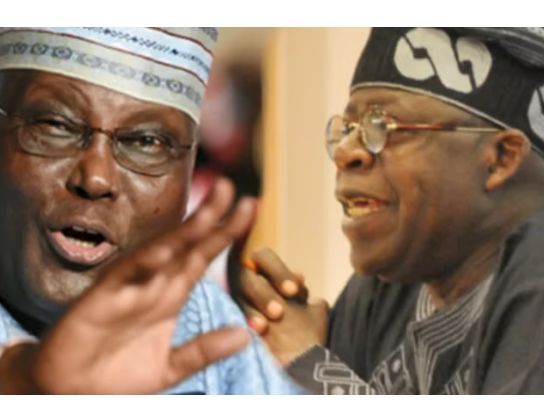
Subsidy Removal: Tinubu, APC reply Atiku, insist policy saved Nigeria from fatal hemorrhage
North, biggest beneficiary of my economic reforms’
By Omeiza Ajayi
ABUJA: President Bola Tinubu and his ruling All Progressives Congress APC have restated that the removal of fuel subsidy by his administration was a difficult but necessary decision that redirected national resources into productive sectors, even as the party pushed back against a proposal by former Vice President Atiku Abubakar to restore the subsidy regime ahead of the 2027 elections.
This position was canvassed by the National Chairman of the APC, Prof. Nentawe Yilwatda, who represented President Tinubu at the second edition of the Policy Roundtable organised by the APC Professionals Forum, tagged the Asiwaju Scorecard Series, with the theme “Dissecting the Renewed Hope Deliverables & Achievements,” held on Tuesday.
Yilwatda said the administration inherited “fuel subsidy distortions, multiple exchange-rate windows, weak revenue mobilisation, foreign-exchange shortages, rising debt-service pressures and years of inadequate investment in critical infrastructure” when Tinubu took office on 29 May 2023.
He said gross external reserves had risen to about $52.7 billion by August 2026, while consolidated non-oil revenue grew from roughly ₦13.63 trillion in 2023 to ₦16.4 trillion in the first two quarters of 2026.
The party chair added that the merchandise trade position improved from a surplus of about ₦44.8 billion for all of 2023 to approximately ₦7.54 trillion in the first quarter of 2026 alone, with real Gross Domestic Product GDP growing by 4.43 percent in the second quarter of 2026 and inflation easing to about 15.4 percent.
Yilwatda linked the improved figures to the administration’s $1 trillion economy target by 2030, tying it to plans for an integrated five-port maritime and logistics corridor connecting Lagos, Ondo, Ibom, Port Harcourt and Calabar, complemented by rail and road links such as the Lagos-Abuja-Kaduna-Kano corridor, the Sokoto-Badagry Super Highway and the proposed Calabar-Maiduguri Trans-Sahara Super Highway.
He said: “the biggest beneficiaries of this economy will be the Northern part of Nigeria, because they will now be trading with countries, trading with Niger, trading with Chad, trading with Burkina Faso, trading with Southern Sudan, trading with Northern Cameroon, trading with Central African Republic… The North is the next business destination of Nigeria.”
He also cited the Ajaokuta-Kaduna-Kano gas pipeline (AKK Project), the Nigerian Education Loan Fund (NELFUND), technical and vocational training schemes, and the CREDICORP credit initiative as investments meant to “translate macroeconomic stability into microeconomic prosperity.”
Yilwatda asked Nigerians to weigh the choice ahead of 2027 between consolidating the reforms or reversing them, declaring: “For the All Progressives Congress, the answer is clear. We choose progress, productivity, investment, infrastructure, innovation, Nigerian enterprise, exports, human capital, and we choose President Bola Ahmed Tinubu.”
Also speaking, the Chairman, Board of Trustees BoT of the APC Professionals Forum, Dr Isa Yuguda, who chaired the Fuel Subsidy Task Force in 2009, said the committee he led at the time “examined the subsidy regime and uncovered serious irregularities, fraudulent practices, and financial leakages that placed a huge burden on the Nigerian economy.”
He said the subsidy system “had become inefficient and consumed enormous public resources that could have been invested in education, security, agriculture, healthcare, infrastructure, and other productive sectors,” adding that its removal was “a difficult but necessary reform intended to redirect national resources towards long-term development.”
According to him, President Tinubu “demonstrated the political courage to implement a reform that previous administrations had acknowledged as necessary but could not fully execute,” with over ₦15 trillion reportedly saved from the exercise.
He also listed NELFUND as a beneficiary in the education sector, alongside increased funding, operational support and equipment investment for the armed forces and other security agencies.
The former Bauchi governor acknowledged that Nigeria “continues to confront serious security challenges arising partly from instability in some neighbouring countries, porous borders, and the cross-border movement of armed groups and criminal networks into Nigerian territory,” and called for strengthened border security, intelligence gathering and regional cooperation to consolidate the gains already recorded.
On the 2027 contest, Yuguda argued that Atiku’s proposal to bring back the subsidy “may appear attractive to citizens seeking immediate relief, but it must be examined against our national experience,” noting that the old regime “was associated with massive leakages, fraudulent claims, inefficiency, and a significant drain on public finances.”
He warned that reviving the system “without clearly addressing these problems risks misleading Nigerians for short-term political gains and could reverse the fiscal space now supporting critical national investments,” insisting that “the 2027 Presidential election should therefore be about issues, achievements, and realistic solutions.”
The post Subsidy Removal: Tinubu, APC reply Atiku, insist policy saved Nigeria from fatal hemorrhage appeared first on Vanguard News.