
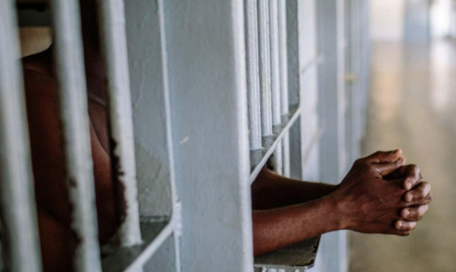
Prison Congestion: Judges face backlash over unjust bail conditions
By Ikechukwu Nnochiri
As concerns mount over the country’s rising prison population, judges and prosecuting agencies have been identified as part of the problem.
The imposition of excessive, impractical, and hard-to-meet bail conditions not only undermines the constitutional presumption of innocence for accused persons but also swells the prisons with awaiting trial inmates.
As of February 9, 2026, Nigeria’s total inmate population stood at 80,812, as disclosed by the Nigeria Correctional Service (NCoS).
Of this number, 51,955 were awaiting trial, 24,913 had been convicted, and 3,850 were held under other categories.
The Controller-General of the NCoS, Mr. Sylvester Nwakuche, disclosed these figures while appearing before the House of Representatives Committee on Reformatory Institutions in Abuja to present the Service’s 2025 budget performance and 2026 budget estimates.
He noted that awaiting trial detainees constitute 64 per cent of the total custodial population nationwide.
Stakeholders within judicial circles have maintained that any genuine effort to decongest prisons must begin with the courts.
In many cases, people charged with minor offences such as misdemeanours – remain in custody because they cannot meet unrealistic bail conditions set by judges.
It is not unusual for a judge or magistrate to grant bail to a person accused of stealing a loaf of bread worth N1,000 at a sum of N1,000,000, with two sureties, one of whom must be a serving lawmaker and the other a member of the Federal Executive Council.
The alleged weaponisation of bail conditions to keep defendants in detention recently came to the fore in the case of former Kaduna State Governor, Mallam Nasir El-Rufai, whose family raised concerns over the conditions the court stipulated must be fulfilled before his release.
El-Rufai, who faces trial for allegedly intercepting the phone communications of National Security Adviser, Nuhu Ribadu, was granted bail on several conditions – including the production of a federal civil servant of Grade Level 17 or above, who must provide evidence of at least three months’ salary payments, authenticated by a letter from a bank manager within the court’s jurisdiction.
He was also requested to produce a letter of attestation from the Chairman of the Kaduna Traditional Council.
El-Rufai’s family promptly protested the conditions as excessively stringent, and the former governor remained in detention despite the bail ruling.
In 2016, a cousin to former President Goodluck Jonathan, Robert Azibola, and his wife, Stella, spent over a week in Kuje prison after being granted bail of N1 billion with two sureties in like sum.
The family subsequently sought a variation of the harsh conditions, which they alleged had been influenced by the EFCC.
On April 13, 2022, the Court of Appeal intervened by varying the bail conditions handed to civil rights activist and convener of the RevolutionNow protest, Omoyele Sowore, in 2019.
A unanimous three-man panel led by Justice Haruna Tsammani held that the Federal High Court ruling restricting Sowore from travelling outside Abuja was excessive.
The court held that, having surrendered his international passport to the trial court, Sowore was at liberty to enjoy freedom of movement as guaranteed under the 1999 Constitution, as amended.
On June 28, 2020, stringent bail terms handed to former Pension Reform Task Team Chairman, Abdulrasheed Maina – who has since been convicted – were varied.
His N1billion bail sum was reduced to N500 million, and the condition requiring two serving senators as sureties was reviewed to allow for just one serving senator who owns property worth N500 million in either Asokoro, Maitama, Wuse II, the Central Business District, or Katampe districts of Abuja.
On April 25, 2017, the Federal High Court in Abuja released the now-convicted leader of the Indigenous People of Biafra (IPOB), Nnamdi Kanu, on bail after he had spent over two years in detention.
The court ordered him to produce a Jewish leader as one of three sureties, each depositing N100 million.
Meanwhile, perturbed by the rising number of awaiting trial inmates, former Chief Justice of Nigeria (CJN) Justice Mahmud Mohammed, on March 1, 2015, urged judges and magistrates to stop imposing stringent bail conditions.
He described it as regrettable that minor offenders were sometimes ordered to meet harsh and untenable bail terms, stressing that the essence of bail is not to punish an accused person but to secure their attendance in court for trial.
Justice Mohammed also cautioned judges to grant bail to suspects in cases where prosecuting agencies were not yet ready to proceed.
More than a decade later, the situation appears unchanged, with courts continuing to impose stiff conditions for bailable offences.
Weighing in on the issue, the Nigerian Bar Association (NBA) on June 4 warned that bail conditions must not undermine the essence of bail.
In a statement signed by its President, Mazi Afam Osigwe, SAN, the NBA said it observed with growing concern a disturbing trend in criminal justice administration, where courts and law enforcement agencies – including the Nigeria Police Force, EFCC, ICPC, and other security agencies – increasingly impose bail conditions that are excessive, impractical, and difficult to satisfy.
“The frequent insistence on sureties who are senior civil servants of specified grade levels, coupled with demands for landed properties of extraordinary value, has in many cases transformed bail from a mechanism for securing attendance at trial into a tool of pre-trial detention. The consequence is that many persons who are constitutionally presumed innocent and have ostensibly been granted bail remain incarcerated because the conditions attached to their release are beyond their reach.
“This troubling development undermines the constitutional right to personal liberty, weakens the presumption of innocence, and defeats the very essence and purpose of bail within our criminal justice system.
“We consider it necessary to reiterate that bail is a constitutional safeguard designed to secure the attendance of an accused person at trial while preserving his or her liberty pending the determination of guilt or innocence. It is neither a punishment nor a mechanism for imposing pre-trial incarceration by indirect means. The law is settled that bail conditions must be reasonable, practical, and capable of being fulfilled by the accused person.
“The Supreme Court, in Suleman & Anor v. Commissioner of Police, Plateau State (2008), emphasised that the object of bail pending trial is to grant pre-trial freedom to an accused person whose appearance in court can be secured through appropriate conditions. Bail is not intended to create insurmountable obstacles that make release impossible.
“We are particularly concerned by the increasing tendency to impose conditions that are disconnected from prevailing economic realities and are often impossible to satisfy. Conditions requiring sureties who are serving civil servants on specific salary grades, ownership of landed properties of extraordinary value, or other burdensome requirements effectively convert the grant of bail into a denial of bail.
“Of particular concern is the continued insistence in some cases on sureties who must be senior civil servants – often on Grade Levels 16 or 17 – and who must own properties worth hundreds of millions of naira. Such conditions have been strongly criticised by the appellate courts.
“In Dasuki v. Director-General, State Security Service & Ors (2019) LPELR-49182 (CA), the Court of Appeal unequivocally condemned the practice of involving serving public officers as a mandatory category of sureties. The Court observed that such requirements are unknown to civilised legal systems and run contrary to public service regulations. The Court further noted that expecting a public servant on Grade Level 16 to own property worth N100 million would not only be unrealistic but could also conflict with public service rules and anti-corruption objectives.
“The Administration of Criminal Justice Act, 2015, is equally clear on this issue. Section 165(1) provides that while the grant and conditions of bail are within the discretion of the court, such conditions must not be excessive. Judicial discretion, though wide, must always be exercised judiciously, reasonably, and in a manner consistent with constitutional guarantees.
“We therefore restate that bail conditions must be tailored solely to ensure attendance at trial. They must never serve as instruments of punishment prior to conviction. Conditions that cannot be met amount in substance to a refusal of bail and contribute directly to pre-trial detention and congestion in correctional facilities.
“We are equally concerned by the restriction of acceptable sureties to a particular class of citizens – particularly senior civil servants. This practice lacks legal, empirical, or rational basis. There is no evidence that civil servants are inherently more reliable as sureties than other law-abiding citizens. Such requirements unduly narrow the pool of eligible sureties and create artificial barriers to the enjoyment of a constitutional right.
“Accordingly, we call on courts at all levels to remain guided by the Constitution, the Administration of Criminal Justice Act, and established judicial authorities when considering bail applications. Bail conditions must be fair, reasonable, proportionate, and attainable. Courts must guard against imposing terms that render the grant of bail illusory or nugatory.
“We also urge judicial officers to remain mindful that every accused person enjoys the constitutional presumption of innocence until proven guilty by a competent court of law. The administration of justice is best served when the rights of accused persons are protected while ensuring their attendance at trial through reasonable and lawful conditions.
“As guardians of the rule of law, we must collectively ensure that the constitutional right to bail remains meaningful and effective. Bail should not become a privilege reserved only for those with extraordinary means or connections. It must remain what the law intended – a mechanism for securing attendance at trial while preserving the liberty and dignity of persons who have not been convicted of any offence.”
While bail remains a privilege granted at the court’s discretion, calls for a more judicious and principled exercise of that discretion continue to grow louder.
The post Prison Congestion: Judges face backlash over unjust bail conditions appeared first on Vanguard News.