
Crisis of a Generation: Why 15 Million Nigerians Are “Locked Out” of the Classroom
ABUJA, Nigeria — Despite a series of high-profile “Renewed Hope” reforms, Nigeria is grappling with a staggering education emergency as 15 million children remain out of school as of March 2026. The crisis, which predominantly affects the North-East and North-West regions, has prompted the Federal Government to issue an urgent $345 million annual funding appeal to bridge the widening literacy gap.
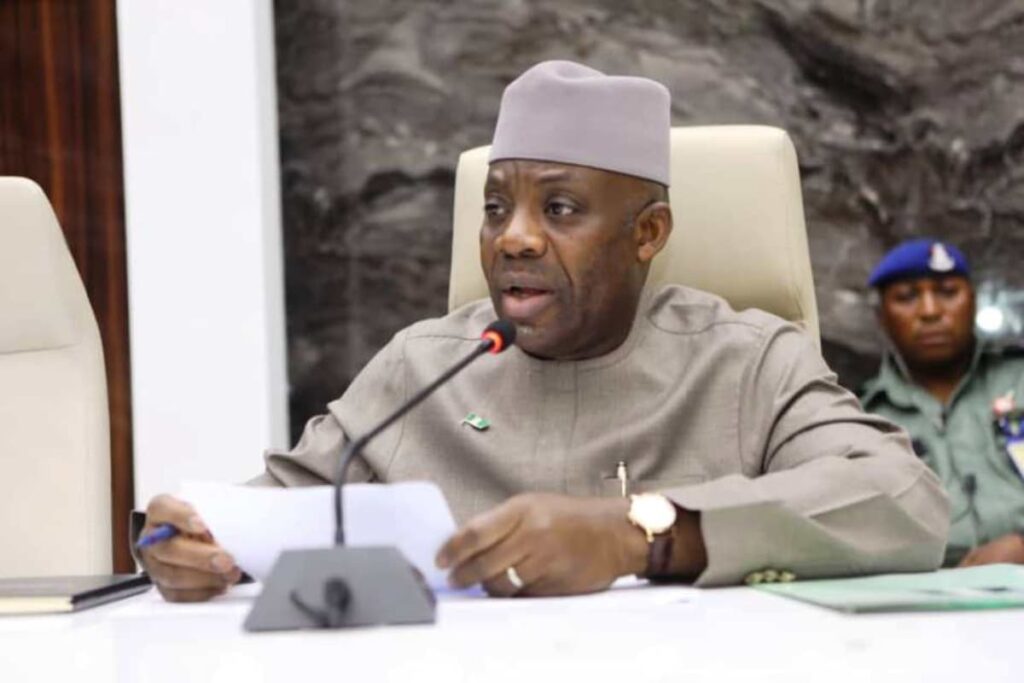
Minister of Education, Dr. Tunji Alausa, revealed on Tuesday, March 24, 2026, that roughly 25% of children aged 5–14 nationwide are currently excluded from formal learning, a figure that spikes to 41% in conflict-affected northern states.
The $345m Re-integration Blueprint
The Ministry of Education has officially operationalized the Nigeria Education Sector Renewal Initiative (NESRI), a framework designed to move beyond traditional classroom settings.
The Financial Gap: To re-integrate 15 million children and provide them with basic vocational skills, Nigeria requires an annual investment of $345 million (approx. ₦517 billion).
HOPE-EDU Reform: The government has unlocked $552 million in co-financing from the World Bank and the Global Partnership for Education (GPE) to jumpstart the “HOPE for Quality Basic Education for All” initiative. Targeted Impact: The program aims to return 1.5 million children to school by the end of the 2026/2027 session and construct 13,000 new classrooms across underserved rural belts.
Security and the “State Police” Factor
Investigative findings suggest that insecurity remains the primary “gatekeeper” keeping children at home. Between 2014 and early 2026, over 1,683 learners were abducted in 70 separate school attacks.
Safe Schools Declaration: While the Federal Government has shut down 47 high-risk colleges to prevent abductions, the push for State Police is now seen as the ultimate solution for school safety.
Community Policing: Administrators at Davebrook Schools & College and other private institutions are watching the constitutional amendment closely, as localized security is expected to provide the “perimeter confidence” parents need to re-enroll their wards.
De-boarding Strategy: In states like Taraba and Adamawa, boarding schools have transitioned to day-only operations as a temporary measure to mitigate night-time raids.
The Economic Cost of Empty Desks
The crisis isn’t just social; it’s a massive drag on Nigeria’s goal of a $1 trillion economy by 2030.
“Every additional year of schooling in Nigeria leads to a 5.7% increase in future earnings,” Minister Alausa noted during the Private Sector Breakfast Convening in Lagos. “By leaving 15 million children on the streets, we are essentially burning our future human capital.”
To counter this, the National Commission for Almajiri and Out-of-School Children Education (NCAOOSCE) has begun mapping 32 million students across 21 states to ensure that interventions are data-driven rather than speculative.