
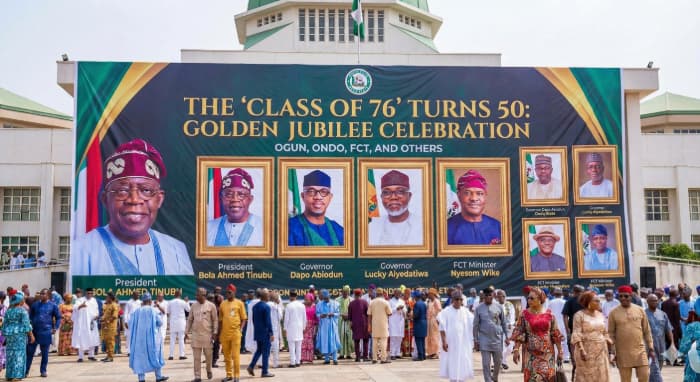
The ‘Class of 76’ Turns 50: Ogun, Ondo, FCT, and Others Shut Down to Celebrate Golden Jubilee
ABUJA — Exactly fifty years ago today, on February 3, 1976, the late Head of State, General Murtala Muhammed, stepped before the microphone to make a historic broadcast that reshaped the map of Nigeria. He expanded the nation from 12 to 19 states and birthed a new Federal Capital Territory (FCT).
Today, Tuesday, February 3, 2026, the seven surviving states from that decree—Ogun, Ondo, Oyo, Imo, Bauchi, Benue, and Niger—alongside the FCT, are rolling out the red carpets to celebrate their Golden Jubilee.
From the rocks of Abeokuta to the dome of Akure and the highways of Abuja, state governments have declared public holidays, shut down offices, and lined up mega-events to mark five decades of survival, growth, and political evolution.
Ogun and Ondo Lead the Celebrations
In the South-West, Ogun and Ondo states have grounded government activities to focus fully on the celebrations.
- Ogun State (The Gateway State): Governor Dapo Abiodun declared today a public holiday, hosting former President Olusegun Obasanjo and other eminent sons. Abiodun highlighted Ogun’s transformation into Nigeria’s industrial capital, boasting a N17 trillion economy.
- Ondo State (The Sunshine State): Governor Lucky Aiyedatiwa declared a two-day holiday (Monday and Tuesday). President Bola Tinubu, represented by the Minister of Interior, Olubunmi Tunji-Ojo, applauded Ondo’s “consistent development and purposeful leadership” at a colourful carnival in Akure.
Meanwhile, in Oyo State, Governor Seyi Makinde has ordered workers to close by noon today as the state honours its 17 past governors at a gala night in Ibadan.
Abuja at 50: Wike Credits Tinubu for Facelift
The celebration in the Federal Capital Territory (FCT) carries a different weight. Abuja, created on this same day to symbolize national unity, is using the Golden Jubilee to showcase infrastructure renewal.
FCT Minister Nyesom Wike, while inspecting road projects in Gishiri and Apo today, declared that President Tinubu has “changed the landscape of Abuja” in just two and a half years. “Remembering where we are coming from, we have done really well to the glory of God in terms of infrastructure and following the Abuja Master Plan,” Wike stated, brushing aside recent labor protests.
The Eastern and Northern Brothers
The jubilee extends beyond the West and the capital:
- Imo State: Governor Hope Uzodimma led a thanksgiving service, reflecting on the state’s rise from the ashes of the civil war to its current status. Imo will honor 50 outstanding indigenes this Saturday.
- Bauchi, Benue, and Niger: These states, born from the restructuring of the old North-Eastern, Benue-Plateau, and North-Western regions respectively, are holding symposia and quiet reflections, marking 50 years of navigating complex security and developmental challenges.
The Unfinished Master Plan
While the Golden Jubilee offers a moment for back-slapping, analysts argue it also exposes the gaps in General Murtala’s original vision.
- The Successes: Decentralization succeeded. Former rural outposts like Abeokuta, Akure, and Owerri are now booming urban capitals. Abuja is Africa’s premier diplomatic hub.
- The Failures: Deep-seated issues remain. From the congestion in Abuja’s satellite towns to the persistent infrastructure deficits in Benue and Niger, the “Class of ’76” still grapples with the pressures of population explosions and fiscal constraints.
As the fireworks light up the skies tonight, citizens across these states share one common hope for the next 50 years: that the physical boundaries drawn in 1976 will finally translate into genuine economic boundaries of prosperity.