
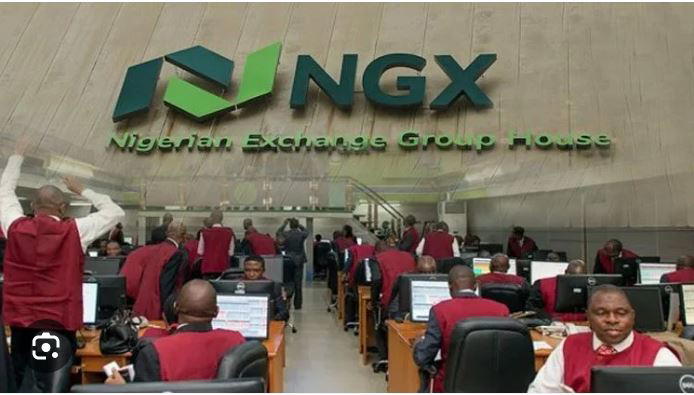
NGX Bleeds ₦1.14 Trillion as CBN’s Historic Rate Cut Shakes Up Banks and Oil Sector
MAKOGI — The Nigerian Exchange (NGX) took a massive hit on Tuesday, February 24, 2026, as investors aggressively sold off large-cap equities following the Central Bank of Nigeria’s (CBN) decision to cut its benchmark interest rate. The stock market shed a staggering ₦1.14 trillion in a single trading session, signaling deep investor caution despite the apex bank’s attempt to stimulate the broader economy.
At the conclusion of its 304th Monetary Policy Committee (MPC) meeting in Abuja, CBN Governor Olayemi Cardoso announced a 50-basis-point reduction in the Monetary Policy Rate (MPR), bringing it down from 27% to 26.50%. This marks the lowest interest rate since May 2024 and the first rate cut of 2026, driven by an 11-month consecutive decline in headline inflation, which eased to 15.10% in January.
The federal government views the rate cut as a definitive turning point. The Minister of Finance, Wale Edun, stated that the move signals a shift from “economic stabilization to consolidation.” The administration aims to leverage the slightly lower borrowing costs to accelerate investments in infrastructure and agriculture without reversing the hard-won gains against inflation. However, with the NGX’s immediate bearish reaction, it is clear that market participants are demanding more aggressive liquidity easing before they confidently return to buying Nigerian equities.
The NGX Bloodbath: Investors Flee Large Caps
Despite the positive macroeconomic signals of disinflation and a stabilizing Naira, the equities market reacted negatively to the MPC’s measured approach.
The Losses: Market capitalization plummeted by 0.92%, closing at ₦124.82 trillion down from ₦125.96 trillion the previous day. The All-Share Index similarly dropped 1,778.95 points to settle at 194,484.61.
The Drivers: Panic selling hit major consumer goods, insurance, and large-cap stocks. Companies like BUA Foods, Tantalizers, and Daar Communications led the losers’ chart, shedding roughly 10% of their share value each.
Banks Face a Double-Edged Sword
For the banking sector, the rate cut presents a complex reality. While a lower MPR theoretically makes business lending cheaper and stimulates credit creation, the CBN deliberately retained tight liquidity controls to prevent excess cash from flooding the system ahead of the 2027 election cycle.
Tight Leash: The MPC kept the Cash Reserve Ratio (CRR) strictly at 45% for commercial deposit money banks and 16% for merchant banks.
The Reality: Financial institutions must still lock up nearly half of their deposits with the apex bank. Consequently, analysts predict that while lending rates might slide marginally, the transmission effect on actual access to cheap credit for businesses will remain restricted.
Oil & Gas: The Executive Order 09 Lifeline
The energy sector emerged as a crucial focal point during the MPC briefing. The committee openly welcomed the newly issued Presidential Executive Order 09, which legally redirects oil and gas revenues directly into the federation account, bypassing previous structural deductions.
Fiscal Boost: Governor Cardoso noted that this order will play a pivotal role in improving Nigeria’s fiscal revenue profile and bolstering external reserves, which recently hit a 13-year high of $50.45 billion.
Market Positioning: On the NGX, oil and gas stocks saw selective positioning from investors who view the sector as a primary beneficiary of the sustained exchange rate stability and improved domestic refining capacity.
The Economy: Transitioning to Consolidation
The federal government views the rate cut as a definitive turning point. The Minister of Finance, Wale Edun, stated that the move signals a shift from “economic stabilization to consolidation.” The administration aims to leverage the slightly lower borrowing costs to accelerate investments in infrastructure and agriculture without reversing the hard-won gains against inflation. However, with the NGX’s immediate bearish reaction, it is clear that market participants are demanding more aggressive liquidity easing before they confidently return to buying Nigerian equities.