National Assembly least trusted Nigerian institution; overtakes Police – Report
…as 73% expressed little trust in judiciary
By Gabriel Ewepu
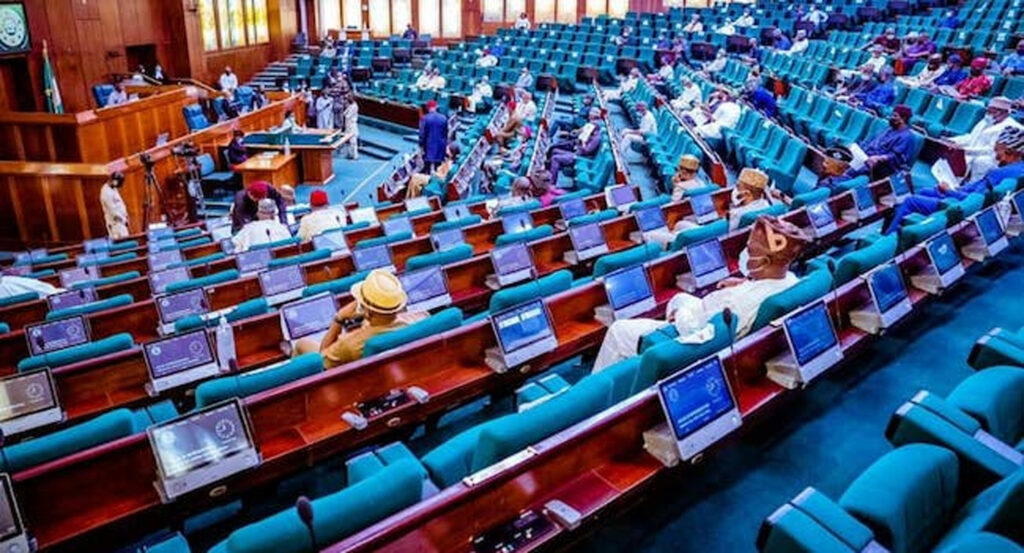
ABUJA – AN independent report tagged ‘2026 Social Cohesion Report’ released at the weekend by the Africa Polling Institute, API, an independent, non-profit, and non-partisan opinion research think-tank, indicated that the National Assembly emerged the least trusted institution of government with 77% of Nigerians having no trust, as it overtakes the Nigerian Police Force.
According to the Executive Director, API, Prof Bell Ihua, who formally unveiled the report at a National Social Cohesion Dialogue in Abuja, computed Nigeria’s Social Cohesion Index (NSCI) at 48.8%. This index represents a 2-percentage-point increase from last year’s, and the highest index recorded since the study commenced. Although the index remains marginally below the average 50 per cent threshold. This upward trend suggests that Nigerians continue to demonstrate resilience and a commitment to coexistence despite prevailing hardships.
Prof Ihua also said the survey findings indicate persistent trust among citizens in religious and traditional leaders, and very little trust in the government and public institutions. Specifically, 51% and 45% of Nigerians expressed significant trust in religious and traditional leaders, respectively, compared with only 28% who trust the government of President Bola Ahmed Tinubu and 23% who trust the National Assembly.
According to him, API, with support from the Ford Foundation, conducted the national citizen survey to measure the state of social cohesion in Nigeria between January and February 2025, which a total of 5,315 interviews were conducted via Face-to-face Household visits using the Stratified Random Sampling technique with citizens aged 15 years and above. The interviews were conducted in five major languages: English, Pidgin, Hausa, Igbo, and Yoruba, and geographic quotas were assigned to ensure that all States and senatorial districts were proportionately represented in the sample.
He also explained that the concept of social cohesion refers to the willingness of a country’s citizens to cooperate and work together to ensure the country’s survival and prosperity, despite tribal, religious, social, or political differences.
He said drawing from the literature, and building upon the 2019, 2021, 2022, and 2025 rounds of surveys, 14 indicators were instrumentalised to measure social cohesion in Nigeria – Identity; Trust; Social Justice & Equity; Civic Participation; Tolerance; Gender Equity; Disability & Inclusion, Impunity; Corruption; Natural Resource Governance; Polarization; Security & Peacebuilding; Coping Strategies; Migration; and Self-worth and Future Expectations.
He said: “This assessment places the National Assembly as the least trusted institution in the country, a position previously held by the Police, with 24% trust in the current survey.”
Meanwhile, the report reads in part, “Identity’ Indicator; The survey revealed that 46% of Nigerians “feel truly proud of Nigeria”, compared to 41% who feel really disappointed in the country; while 11% feel indifferent. Also, 44% of Nigerians are proud of being equally identified as Nigerian and from their ethnic group; while 29% identify more with their ethnicity than with being Nigerian, compared to only 11% feel more Nigerian than ethnic.
“‘Trust Indicator’; the survey reported that 72% of Nigerians expressed little to no trust in the government of President Bola Tinubu, down 11-points from 83% in 2025. Similarly, 77% expressed little to no trust in the National Assembly, while 73% expressed little to no trust in the judiciary. Comparatively, 49% expressed little to no trust in religious leaders, while 55% expressed little to no trust in traditional leaders.
“‘Civic Participation & Patriotism’ Indicator; 71% of citizens are “Extremely or Somewhat Willing” to sacrifice or give up something of interest for the collective good of the nation; 77% are “Extremely or Somewhat Willing” to cooperate with fellow citizens from other ethnic groups to make Nigeria more united; and 73% are “Extremely or Somewhat Willing” to participate in the political process to make Nigeria a better place for all. Also, 89% expressed willingness to support inter-ethnic marriages, compared with 62% who supported inter-faith marriages.
“‘Polarization’ Indicator’; the data on polarization provided mixed reactions. On the one hand, 48% believe the country is much more divided today than it was four years ago, up 17-points from 31% in 2025. On the other hand, 20% believe the country is much more united today than it was four years ago. This statistic also increased by 10 points, from 10% of respondents who thought the country was more united in 2025. Political party affiliation (56%) was identified as the most significant factor leading to conflicts and divisions in communities, followed by ethnic (46%) and religious (44%) differences.
“‘Gender Equity’ Indicator; 69% of Nigerians agree that women should be allowed to lead in all aspects of society, especially in politics and corporate entities, and 62% agree that women should be given equal entitlement to family inheritances. Another 84% believe boys and girls should have equal access to education. Furthermore, 66% agree that women who marry into other states should be allowed to claim benefits in both their state of origin and their husband’s state. 60% say they would vote for a woman as President of Nigeria, 66% as Governor, 73% as Local Government Chairperson.
“‘Self-Worth and Future Expectation’ Indicator; Regarding self-worth, 45% of Nigerians feel “Extremely or Somewhat Dissatisfied” about their lives as Nigerians right now, compared to 41% who feel “Extremely or Somewhat Satisfied”; while 55% would consider relocating abroad with family members if offered the opportunity. Conversely, 28% said they would not be willing to relocate, up 7 points from 21% in 2025. Consequently, 61% of citizens believe that the future of the country would be much better than it is presently, up 5-points from 56% in 2025.”
Meanwhile, the 2026 Nigeria Social Cohesion Survey and the Nigeria Social Cohesion Index, said the overall results, with a score of 48.8%, indicate that Nigeria still falls below the average (50%) threshold for social cohesion. Particularly significant in the 2026 survey is the finding that, for the first time since the survey’s inception, the majority of respondents identified primarily as Nigerians rather than by ethnic, religious, or regional affiliations. This shift represents an important milestone in the country’s nation-building journey and points to a strengthening sense of shared national identity.
In its recommendation, the API said the government must now match citizens’ momentum with structural reforms; Nigeria requires a National Social Cohesion Commission focused on fostering inclusive governance, national identity, unity, peaceful coexistence, trust, civic participation, social justice and positive future expectations; and the majority Nigerian-first identification is the country’s most important social capital right now, and it must be protected and nurtured; and Social Cohesion desk in every Ministry, Department and Agency (MDA) of government, to ensure that development plans and public policies are inclusive and socially-cohesive.
The post National Assembly least trusted Nigerian institution; overtakes Police – Report appeared first on Vanguard News.