Meet the strongest ‘Nigerian’ XI that will be at 2026 World Cup
By Adegboyega Adeleye
The Super Eagles will not be at the 2026 FIFA World Cup, a painful reality for a nation that has become one of Africa’s most consistent producers of football talent.
For a country with one of Africa’s richest football traditions and a seemingly endless production line of elite talent, the Super Eagles’ failure to qualify remains one of the biggest disappointments heading into the tournament in the United States, Canada and Mexico.
Yet while Nigeria’s famous green-and-white jersey will be absent from football’s biggest stage, Nigerian influence certainly will not be.
Across several World Cup squads are players born to Nigerian parents or carrying strong Nigerian heritage, many of whom have developed into some of the most exciting footballers in the world. Some were monitored by the Nigeria Football Federation, others were approached at different stages of their careers, while a few openly admitted they considered representing the Super Eagles before choosing another nation.
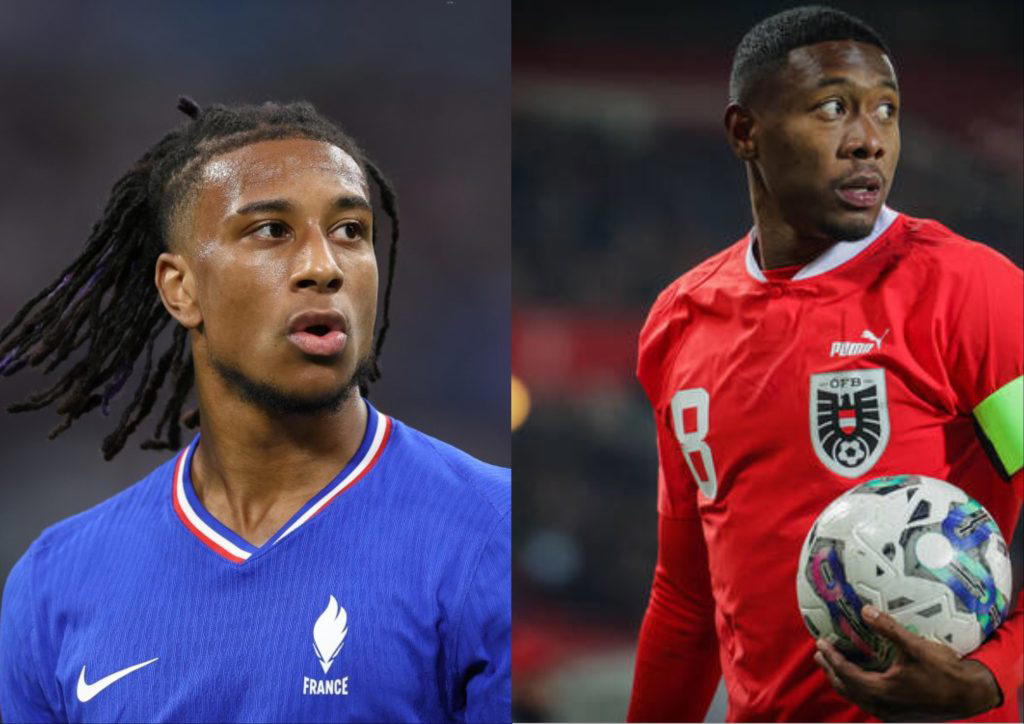
From England star Bukayo Saka and Germany playmaker Jamal Musiala to France winger Michael Olise and United States striker Folarin Balogun, the tournament will showcase a remarkable collection of talent with Nigerian roots. Looking at a team featuring Saka, Musiala, Olise, Alaba, Akanji and Balogun, one question inevitably lingers: if they had all chosen Nigeria, just how far could the Super Eagles have gone at World Cup 2026?
Based on the confirmed World Cup squads, here is the strongest Nigerian XI that could have played for the Super Eagles.
Goalkeeper: Owen Goodman (Canada)
The Crystal Palace goalkeeper completes one of the more intriguing stories on this list. Born in Canada to a Nigerian mother and an English father, Goodman remained eligible for Nigeria and was even invited to the country’s U-20 setup before ultimately committing to Canada.
While he is not expected to start for Canada at the World Cup, his inclusion highlights a recurring theme in Nigerian football: the battle for dual-nationality talent. His case is especially notable because goalkeeping remains one of the positions where the Super Eagles have searched for long-term stability in recent years.
Right-back: Manuel Akanji (Switzerland)
Akanji arrives at the World Cup as one of the most experienced defenders in international football. Born to a Nigerian father and Swiss mother, the Switzerland international has represented his adopted nation at multiple World Cups and European Championships.
The defender has never hidden his Nigerian roots, famously revealing a tattoo featuring the Super Eagles crest. Combining leadership, composure and elite-level experience, Akanji would be an automatic starter in this hypothetical Nigerian side.
Centre-back: David Alaba (Austria)
Every great team needs a leader and Alaba would almost certainly wear the captain’s armband.
The Real Madrid defender, whose father is Nigerian, has spent more than a decade representing Austria at the highest level. Widely regarded as one of the finest defenders of his generation, Alaba brings experience, versatility and authority to the backline.
After missing Euro 2024 through injury, he returns to lead Austria at their first World Cup appearance since 1998.
Centre-back: Noah Okafor (Switzerland)
Born to a Nigerian father and Swiss mother, Okafor has become a regular fixture in the Swiss national team and enters the tournament with valuable major-competition experience.
His pace, athleticism and versatility make him a strong complement to Alaba. Still only 25, he represents the blend of youth and experience that every successful World Cup team requires.
Left-back: Antonio Nusa (Norway)
Among the youngest players in this team, Nusa is also one of its most exciting talents.
The Norway international, born to a Nigerian father and Norwegian mother, has quickly emerged as one of Europe’s most highly rated young attackers. His speed, creativity and direct running have made him a key figure for both club and country.
At just 21, the World Cup offers him the perfect stage to announce himself to a global audience.
Midfield: Felix Nmecha (Germany)
Nmecha’s Nigerian heritage remains an important part of his identity, something he has spoken about publicly on numerous occasions.
Born to a Nigerian father and German mother, the Borussia Dortmund midfielder represented both England and Germany at youth level before eventually committing to Germany. His ability to control possession, break up play and drive forward makes him an ideal midfield anchor.
Midfield: Carney Chukwuemeka (Austria)
Few international decisions have generated as much debate among Nigerian supporters as Chukwuemeka’s choice.
The gifted midfielder was long admired by Nigerian football officials before switching allegiance to Austria in 2026. Dynamic, technically gifted and comfortable carrying the ball through midfield, Chukwuemeka adds creativity and energy to this side.
His decision was made even more painful for Nigerian fans because Austria offered something Nigeria could not — a place at the World Cup.
Right wing: Bukayo Saka (England)
Saka is arguably the biggest name in this entire team.
Born in London to Nigerian parents, the Arsenal winger has developed into one of England’s most influential players and one of the Premier League’s biggest stars. Since making his England debut in 2020, he has become a central figure in Gareth Southgate’s successor’s plans and enters the tournament as one of the favourites to shine.
Despite representing England, Saka has consistently spoken warmly about Nigeria and continues to enjoy strong support from Nigerian fans.
Attacking midfield: Jamal Musiala (Germany)
If there is one player who perfectly captures the “what if” feeling surrounding this team, it is Musiala.
Born to a British-Nigerian father and German mother, the Bayern Munich star had multiple international options before choosing Germany. Since then, he has established himself as one of the most gifted attacking midfielders in world football.
Creative, intelligent and devastating in one-on-one situations, Musiala is widely expected to be Germany’s most important attacking player at the World Cup.
Left wing: Michael Olise (France)
Olise enters the tournament as one of the most exciting attacking talents in Europe.
Born in London to a British-Nigerian father and a Franco-Algerian mother, the Bayern Munich winger was eligible for four countries before choosing France. Blessed with exceptional technique, vision and creativity, he has quickly become one of the most feared wide players in the game.
With France among the favourites for the title, Olise could be one of the breakout stars of the competition.
Striker: Folarin Balogun (United States)
Leading the line is Balogun, a player who once appeared to be a realistic target for Nigeria before ultimately choosing the United States.
Born in New York to Nigerian parents and raised in England, Balogun was eligible for three countries before committing to the USMNT in 2023. Since then, he has become one of the team’s most important attacking players and enters the World Cup as America’s first-choice striker.
His movement, finishing and pace make him the ideal focal point for this imagined Super Eagles attack.
The bigger picture
Beyond the starting XI, players such as Eberechi Eze, Noni Madueke, Promise David, Tani Oluwaseyi and Ime Okon further underline the scale of Nigerian talent spread across the global game.
For Nigerian football, the World Cup will serve as both a celebration and a painful reminder. A celebration because Nigerian heritage will be represented across multiple nations competing for football’s biggest prize. A reminder, because many of these players could, under different circumstances, have been donning the beautiful green and white colours of the Super Eagles.
The post Meet the strongest ‘Nigerian’ XI that will be at 2026 World Cup appeared first on Vanguard News.