
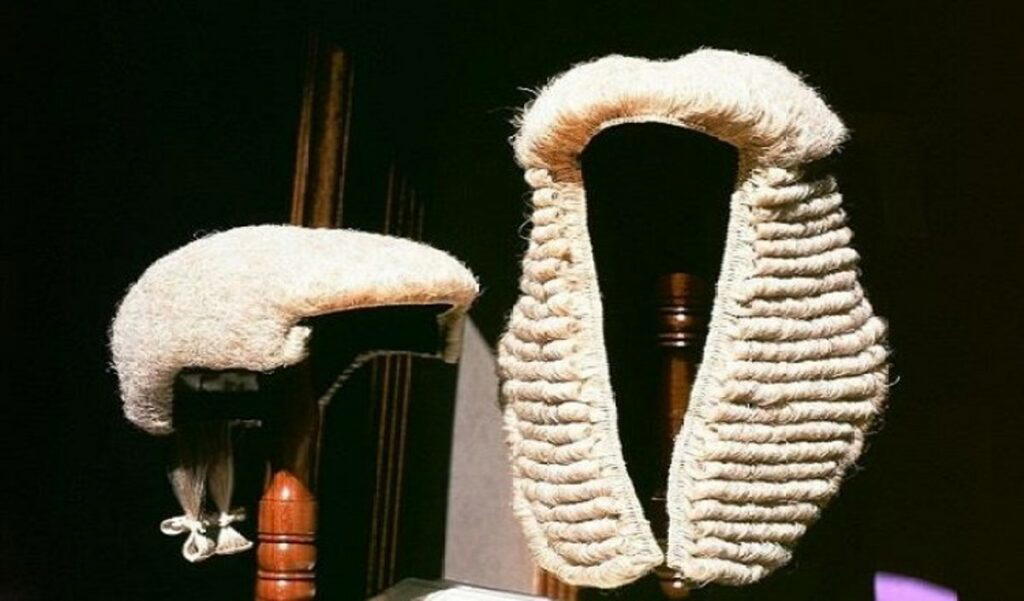
Judicial Reform: Body of Benchers cracks down on charge-and-bail lawyers
By Ikechukwu Nnochiri
The Body of Benchers (BoB), the apex regulatory body for the legal profession, has vowed to wield the big stick to check what it termed the embarrassing conduct of charge-and-bail lawyers.
The body is responsible for the call of graduates of law school to the Nigerian Bar as well as the regulation of the legal profession in Nigeria.
The BoB expressed concerns about the quality and standard of those admitted to practice law in the country, at a three-day Call to Bar ceremony that saw the induction of 6,010 new wigs.
The occasion, held in Abuja from July 7 to 10, further swelled the population of lawyers in the country, which was previously estimated at about 250,000 practitioners.
In an address presented by its Chairman and Life Bencher, HRM Albert Akpomuje, SAN, the BoB blamed universities for the bloated population of lawyers.
It deprecated the deliberate practice of some accredited university law faculties admitting students in excess of their allocated quota for law programmes.
Consequently, the legal body disclosed that a committee has been set up to streamline and recommend the number of aspirants to be called to the Bar in any given year.
It attributed the dwindling professionalism among lawyers to the shortage of jobs caused by the astronomical annual increase in the number of law graduates and those seeking admission to the Bar.
“The Body of Benchers cannot afford to produce lawyers when there are not enough jobs to accommodate them, hence the need to regulate and put a benchmark on those to be called in any given year.
“This will also take care of situations where members of the Bar, after call, tout for briefs with no office, at the Magistrate Courts, waiting at the police stations, and earn the embarrassing name popularly known as charge-and-bail lawyers,” the legal body stated.
Continuing, it said: “As a regulatory body, we owe a duty to the Government, the people of this country, and, in particular, the noble profession of law, to ensure that admission into this honourable profession does not become an all-comers affair, as this will inevitably have the propensity to reduce the standard expected from this noble profession.
“Apart from just calling persons to the Bar, the Body of Benchers is very concerned with the quality and standard of those admitted to the Bar to practise law in Nigeria.
“For those of us already privileged to practise law, and by extension those of you being accorded the rare honour today of being called, we are very much aware of the fact, with no iota of apology, that our noble profession is number one in the world.
“As such, it is expected that aspirants to the Bar must be the best of the best and further ensure that, after being called, that standard of being the best is maintained either in character or in learning.
“The Body of Benchers has observed, from the committee set up to address this issue of the astronomical increase in the numbers of those wishing to be admitted to the Bar as lawyers, and from information gathered particularly from the Nigerian Law School, that the greatest challenge stems from the deliberate act of the faculties of law of some of the universities accredited to graduate law students, exceeding the maximum quota of students allocated to the university that can be admitted to read law.
“With all due respect, this is an affront to the constituted authority that prescribed the quota for admission, but, worse still, it is an act of indiscipline on the part of those who are required to show good example to the students who aspire to be members of this noble profession of law.
“The backlash or consequence of some of the universities not keeping within the limit of their quota has resulted not only in lowering the standard expected of the students admitted but also in causing a backlog of students not getting into the Nigerian Law School after graduation.
“Some of them wait up to three years or more before gaining admission into the Nigerian Law School due to lack of space to accommodate them in the school, based on the quota of all the universities wherein provision is made by the law school to admit students.
“In sympathy with some of the students, the law school, in collaboration with the Body of Benchers, had to bend over backwards to have two streams of admission into the Nigerian Law School, with lecturers overstretched beyond limit, apart from the financial and logistical implications associated with it.
“The distinguished body wishes to clarify a misconception and notify the general public and Nigerians that the Body of Benchers will not deliberately deny qualified students admission to the Law School.
“The problem, as highlighted earlier, is that some of the universities admit over the quota allocated to them, and some universities not yet accredited produce law graduates even before applying to be so accredited.
“Furthermore, every professional body is regulated with respect to the number of those to be admitted into the profession in any given year and time, based on the needs of society.
“For the legal profession, the Body of Benchers and the Council of Legal Education are guided by the needs for legal services in the country, which form the basis of the quota allocated to universities, including the facilities on ground and the ability of the faculty of law to produce law students of the highest standard to be called to the Bar by the Body of Benchers,” the Chairman of the BoB, HRM Akpomuje, SAN, added.
He maintained that, since the problems usually emanate from some of the universities, there is a need to now keep records of law students admitted in any given year by the universities, which will be monitored strictly to ensure that the universities do not exceed their quota of admission.
“After all these measures have been put in place, and any university still exceeds the prescribed quota, it will not be out of place to wield the big stick or hammer by way of sanctions against any university that wilfully flouts or refuses to keep within the prescribed quota. The body may be compelled to direct that such universities be de-accredited from producing law graduates for call to the Bar, either permanently or for a number of years.
“Students and parents have to be watchful to ensure their wards do not fall prey to these problems leading to a clog in admission into the Nigerian Law School,” the legal body further stated.
The BoB’s position came amid mounting protests by over 4,000 law graduates of the National Open University of Nigeria (NOUN), who had petitioned the Attorney-General of the Federation and Minister of Justice, Lateef Fagbemi, SAN, over their continued exclusion from the Law School.
The petition, signed by the group’s president, Adefowora Adedeji, and Secretary-General, Samuel Udofia, described the action as discriminatory and a breach of the constitutional rights of NOUN law graduates.
The petitioners contended that the 2018 amendment of NOUN’s Establishment Act recognised their law degrees for professional legal training, which they said enabled the pioneering set of graduates to gain admission into the Law School.
“This has become a national crisis. Law graduates from other Nigerian universities are given the right of admission to the Nigerian Law School, while we are excluded. This is against the constitutional principles of equality, fairness, and justice.
“We have equal rights to legal education as other Nigerian university law graduates. This is against our rights enshrined in Section 42 of the Constitution of the Federal Republic of Nigeria 1999 (as amended). This is a pure state of discrimination!
“However, it is pertinent to inform you, Sir, that we are over 4,150 NOUN law graduates currently awaiting admission into Bar Part II, Nigerian Law School.
“Many among us have waited an average of more than five years, while many have sadly passed away, and the majority of us are now advanced in age.
“In light of this situation, we earnestly seek your intervention to impress upon the Council for Legal Education and the Nigerian Law School the urgent need to address our matter.
“Specifically, we are requesting an immediate admission action plan that will accommodate these over 4,000 graduates into Bar Part II within the shortest possible time,” the petition read.
At the 2026 Legal Education Summit organised by the Nigerian Bar Association (NBA) in May, senior lawyers expressed varied opinions on a proposal to abolish the Nigerian Law School.
While the Vice-Chancellor of Imo State University, Prof. Uchefula Chukwumaeze, SAN, cited prevailing realities to argue that the Law School has outlived its usefulness, his position was flayed by both the Chairman of the Council of Legal Education, Chief Emeka Ngige, SAN, and the Director- General of the Nigerian Law School, Dr. Olugbemisola Odusote.
Prof. Chukwumaeze, SAN, had recommended that the Council’s functions be limited solely to establishing the standards and requirements for Call to Bar, while law faculties at accredited universities be permitted to undertake the training of prospective lawyers.
For its part, the NBA, through its President, Mazi Afam Osigwe, SAN, while supporting the call for reforms, canvassed a reduction in the number of years required for the study of law.
“The imperativeness of a system of legal education that can produce lawyers with the necessary skills and capacity to meet the evolving needs of society has always been emphasised.
“The practical and focused content of university education will achieve better results even if it lasts for three years.
“The increasing number of law graduates, coupled with the inability of the Law School to admit them, may force a review of the system,” the NBA President added.
As the BoB readies itself for reform, one of the central challenges it will likely face is balancing the pursuit of professionalism against the right of qualified law graduates to seek admission to the Bar.
The post Judicial Reform: Body of Benchers cracks down on charge-and-bail lawyers appeared first on Vanguard News.