
Insecurity and fifth columnists: Highly placed individuals fund kidnap for survival, politics – Rear Admiral Olisemelogor
By Evelyn Usman
Every year, June 12 serves as a reminder of Nigeria’s democratic journey, a symbol of the people’s struggle for freedom, justice, accountability and representative governance. It is a day that celebrates the triumph of the popular will and the resilience of democratic ideals.
Yet, as Nigerians commemorate another Democracy Day, the significance of the occasion is being overshadowed by a troubling reality: the persistence of insecurity across several parts of the country.
From insurgency in the North-East to banditry in the North-West and mass kidnappings in the North-Central, insecurity continues to cast a dark shadow across the country.
More worrying is the gradual spread of kidnapping and banditry to parts of the South, particularly the South-West region, raising fears that criminal networks are expanding beyond their traditional strongholds.
A recent example was the discovery of a suspected criminal enclave in a forest in Ogun State by security operatives, leading to the arrest of suspects believed to be linked to kidnapping and other violent crimes.
As these threats continue to evolve and spread, millions of Nigerians grapple daily with fear and uncertainty, while for many communities, the democratic ideals of security, dignity and freedom of movement remain aspirations rather than lived realities.
The situation raises a fundamental question: how secure is democracy when citizens cannot safely travel on highways, cultivate their farms, send their children to school or sleep peacefully in their homes?
Efforts of security agents
Despite these challenges, the Nigerian military, Police and other security agencies continue to intensify their efforts and sustain pressure in the fight against criminal and terrorist groups across the country.
This is evident in the recent rescue of 427 residents of Ngoshe and Dille communities in Borno State by troops of Operation HADIN KAI, alongside other successful operations involving the rescue of hostages, dismantling of terrorist camps, recovery of weapons and neutralisation of criminal elements. Defence Headquarters recently disclosed that troops neutralised 317 terrorists and criminals in May alone, arrested 314 suspects and rescued 221 kidnapped victims.
These achievements highlight the sacrifices being made daily by military personnel operating under difficult and often dangerous conditions. They also demonstrate that despite the enormity of the challenge, security forces remain committed to restoring peace and stability.
The situation is disturbing — Rear Admiral Olisemelogor
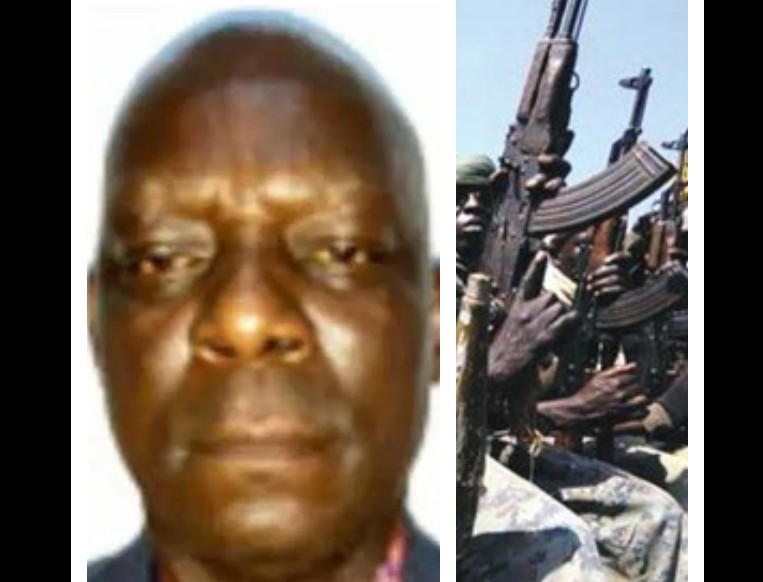
The growing insecurity has prompted concern among security experts, including retired naval officer, Rear Admiral Dickson Olisemelogor, who described the situation as both disturbing and potentially dangerous for the country’s democratic stability.
According to him, the persistence of kidnapping across the country is gradually creating conditions that could undermine public confidence in governance and law enforcement.
He said: “The situation is worrisome and sets the stage for anarchy if allowed to continue. Kidnapping has become very attractive because it is now a major source of free income and one of the easiest ways to embarrass perceived enemies. Highly placed individuals are now investing in it to generate money for survival, political campaign purposes and to create room for illegal mining of mineral resources.
“Some young and educated people are also abandoning internet fraud and engaging in kidnapping because it pays more.
“Security agencies are doing their best based on available material and human resources. I suspect they are also constrained by the body language of political authorities.
“All hands must be on deck to stop the madness. In addition to strict enforcement of anti-terrorism and anti-kidnapping laws, government agencies such as the National Orientation Agency and the media should embark on aggressive public enlightenment campaigns.
“Content creators, community leaders and religious leaders should also be encouraged to preach against kidnapping and criminality. We must make society reject these crimes instead of glorifying the proceeds.
“Communication service providers should be mandated to deepen their collaboration with security agencies in tracking the movement of kidnapped persons and assisting investigations,” he added.
Network of collaborators
Beyond the gunmen operating in forests and remote hideouts, security analysts say another major challenge confronting the country is the network of collaborators working quietly from within society.
Commonly referred to in security circles as fifth columnists, these individuals are believed to provide critical support to criminal groups through intelligence leaks, logistics assistance, information sharing and other forms of collaboration.
Unlike insurgents carrying weapons, fifth columnists often operate unnoticed. They may be found within communities, institutions and, in some cases, places entrusted with sensitive information.
Their weapon is information. And in modern warfare, information can be as destructive as bullets.
Recent reports of intelligence leaks have once again brought this concern to the forefront.
Security sources disclosed that intelligence was intercepted indicating plans by terrorists to attack schools in parts of Kogi, Edo, Ondo and Nasarawa states and carry out mass abductions of students.
As expected, the intelligence was shared with relevant security agencies to enable preventive measures. But before operational responses could be fully implemented, details of the intelligence reportedly leaked into the public domain.
For security professionals, such breaches are deeply troubling. Once terrorists become aware that their plans have been uncovered, they can change targets, alter strategies, relocate operatives or postpone attacks.
In essence, the element of surprise, often crucial to successful counter-terrorism operations, is lost.
Security analysts often point to past incidents where planned operations were allegedly compromised by leaks, enabling insurgents to evade capture and frustrate military efforts.
During the administration of former President Goodluck Jonathan, reports circulated within security circles about a foreign-assisted operation against Boko Haram that was allegedly compromised after sensitive information leaked ahead of execution. Though details remain disputed, the episode is still cited by security insiders as a warning of the devastating consequences of operational compromise.
More troubling findings
Even more disturbing are allegations that some fifth columnists now provide kidnappers and insurgents with personal details of potential targets, including telephone numbers and movement patterns.
Security sources say criminal groups increasingly rely on such information to monitor and track victims before striking.
A recent example frequently cited in security circles is the abduction of former Director of Defence Information, Maj. Gen. Rabe Abubakar and his wife in Katsina State.
Military sources familiar with the incident believe the retired General may have been trailed over a considerable distance before the abduction occurred, raising concerns about the possibility of insider-enabled surveillance.
As of the time of writing, the couple was still in captivity, with kidnappers reportedly demanding the release of detained associates and the return of confiscated livestock in exchange.
While investigations continue, the incident has reinforced fears that criminal groups are benefiting from information supplied by individuals operating from within.
The challenge extends beyond intelligence leaks.
Over the years, security agencies have arrested individuals accused of supplying food, fuel, medicines and other logistics to insurgents. Communities have sometimes been accused of warning terrorists about troop movements, while isolated cases of compromised security personnel have occasionally surfaced.
The danger
Though such cases, according to the military, represent a tiny fraction of the patriotic men and women serving the nation, their impact can be devastating.
A serving senior Army officer, who spoke on condition of anonymity, warned that even isolated breaches of trust within the system can have fatal consequences for ongoing operations.
He said: “A single leak can expose an operation. A single informant can compromise months of planning. A single act of betrayal can cost lives. We have lost troops in avoidable situations because of compromised intelligence.
“Defeating insecurity requires more than military action. It demands a whole-of-society approach in which citizens actively support law enforcement, protect sensitive information and place national interest above personal or political considerations”.
Corroborating this concern, a senior Air Force officer, also said internal sabotage and the activities of fifth columnists continue to undermine both operations and logistics across various theatres of engagement.
He explained that “the danger is not only in direct confrontation with adversaries but also in the silent compromise of intelligence and operational plans from within.
“The impact of internal breaches is often underestimated. It affects mission planning, logistics, timing, and in some cases, directly exposes personnel to danger in the field. These informants are also among politicians and highly placed Nigerians.
“While the Armed Forces, Police and other security agencies continue to demonstrate courage and resilience, sustained success against insecurity will depend on stronger internal safeguards and a broader national commitment to protecting sensitive security information,” he stated.
Ultimately, Nigeria’s security challenge demands collective resolve beyond military action. While security forces continue to record gains, lasting peace will depend on citizens, institutions and leaders working together to deny criminals support, protect sensitive information and strengthen trust. Only then can democracy fully deliver safety, dignity and freedom for all Nigerians.s while preserving the community-based policing model that has defined Amotekun since its inception.
The post Insecurity and fifth columnists: Highly placed individuals fund kidnap for survival, politics – Rear Admiral Olisemelogor appeared first on Vanguard News.