
Global conflicts hindering Nigeria’s access to military hardware, says Defence Minister
…Calls for Local Defence Production, National Database to Tackle Insecurity
By Kingsley Omonobi
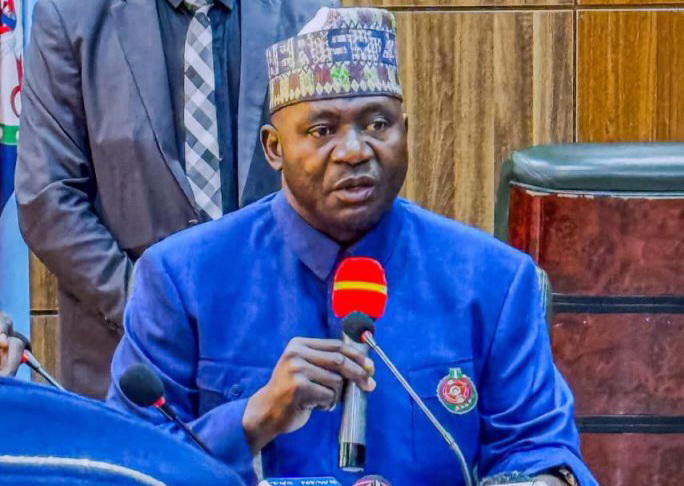
ABUJA — Nigeria’s Minister of Defence, Christopher Musa, has said ongoing conflicts involving Israel, Iran, the United States, Russia and Ukraine are making it increasingly difficult for Nigeria to procure modern military hardware needed to combat insecurity.
Speaking on Saturday at the Nigerian People’s Strategic Conference and Defence Exhibition 2026 in Abuja, themed “Building a Modern Security Ecosystem: Integrating Private Sector Capacity into Nigeria’s National Security Architecture,” Musa said the global security environment had exposed Nigeria’s dependence on imported defence equipment.
According to him, countries involved in the conflicts often secure military supplies ahead of others through advance payments, leaving nations like Nigeria struggling to access critical equipment.
“With the war in Ukraine, Russia, Iran, U.S. and Israel, it has been extremely difficult getting equipment. Most times, they make down payments because they have the money and produce most of these items. Even when you want to buy, they have already been booked for them,” he said.
Musa described the situation as a wake-up call for Nigeria to strengthen indigenous defence manufacturing capabilities.
“The only solution is for us to produce what we need. Nigeria cannot continue to depend entirely on imported security solutions,” he added.
The minister commended local defence manufacturers and innovators and urged greater government support and patronage for indigenous military equipment production.
He also identified the absence of a comprehensive national database as a major obstacle to effective policing and crime prevention, stressing that modern security challenges require accurate data and intelligence.
“We are struggling because we do not have a proper database,” Musa said, noting that the lack of reliable records makes it difficult for security agencies, particularly the police, to track criminal activities and suspects.
He appealed to the National Assembly to support efforts to establish a comprehensive database for all Nigerians, describing it as vital to national security, governance and planning.
“It is only with that that the job will become much easier for security forces. The Nigerian Police is struggling because they do not have a database to track and trace,” he said.
Despite the challenges, the minister praised the police for recording successes in crime-fighting efforts.
“I commend them because I think they are performing magic. Some of the crimes they are able to solve are extremely difficult without a database,” he added.
Musa stressed that security agencies alone could not effectively tackle insecurity, urging citizens to provide timely information to law enforcement authorities.
“Security agencies are not magicians. If they do not get support and information at the right time, it becomes extremely difficult to curtail criminal activities,” he said.
He noted that criminals often thrive because they receive information, logistics, shelter and financial support from collaborators within communities.
The minister also called for stronger public-private partnerships in national security, saying private firms can contribute significantly to intelligence gathering, infrastructure protection, cybersecurity, surveillance and emergency response operations.
According to him, such collaborations must be properly coordinated and regulated to complement statutory security institutions.
“Nigeria’s security future cannot be secured through isolated efforts. It requires collaboration between government, industry and communities,” he said.
Musa further urged state governors to ensure that increased federal allocations translate into meaningful development and improved living conditions at the grassroots level.
“The tendency is now to throw everything at the federal government. If you look at the amount of money being released monthly to governors, it is important that these resources get to the people so that we can address poverty and illiteracy,” he said.
He argued that poverty, unemployment and poor education remain major drivers of insecurity across the country.
The minister also advocated proper regulation of the Civilian Joint Task Force and other community-based security groups, warning that placing weapons in the hands of unvetted individuals could become counterproductive.
Drawing from experiences in the fight against insurgency, Musa said properly screened and trained community volunteers had contributed significantly to military operations.
“It must be regulated because it is important. If you put weapons in the wrong hands, it might become counterproductive,” he said.
In his remarks, Deputy Speaker of the House of Representatives, Benjamin Kalu, assured that the National Assembly would continue to support security agencies through legislation, oversight and funding.
Kalu stressed that military operations alone could not solve Nigeria’s security challenges, pointing to poverty, unemployment, poor education, weak local governance and social exclusion as underlying factors.
“As Parliament, we remain committed to supporting our security institutions through legislation, oversight and adequate funding to ensure they are properly equipped to meet the expectations of Nigerians,” he said.
The Deputy Speaker also endorsed calls for improved national data management, describing credible data as critical for governance, economic planning and security operations.
He disclosed that the National Assembly was considering legislative measures aimed at strengthening Nigeria’s data management architecture and reiterated support for local government reforms under the ongoing constitutional amendment process.
Kalu also highlighted the recent passage of the State Police Bill in the House of Representatives, describing it as a significant milestone after years of debate.
“On June 11, 2026, a significant milestone was achieved in the House of Representatives. The State Police Bill, which I proudly sponsored, successfully passed through the House after decades of debate and repeated attempts by previous assemblies,” he said.
According to him, Nigeria’s highly centralised policing structure is no longer sufficient for a country with a population exceeding 220 million.
He also urged greater private sector participation in addressing emerging security threats, saying businesses, technology firms and financial institutions must become integral partners in Nigeria’s security architecture.
“The private sector must not merely be invited into the security conversation; it must become an essential partner,” Kalu said.
The post Global conflicts hindering Nigeria’s access to military hardware, says Defence Minister appeared first on Vanguard News.