
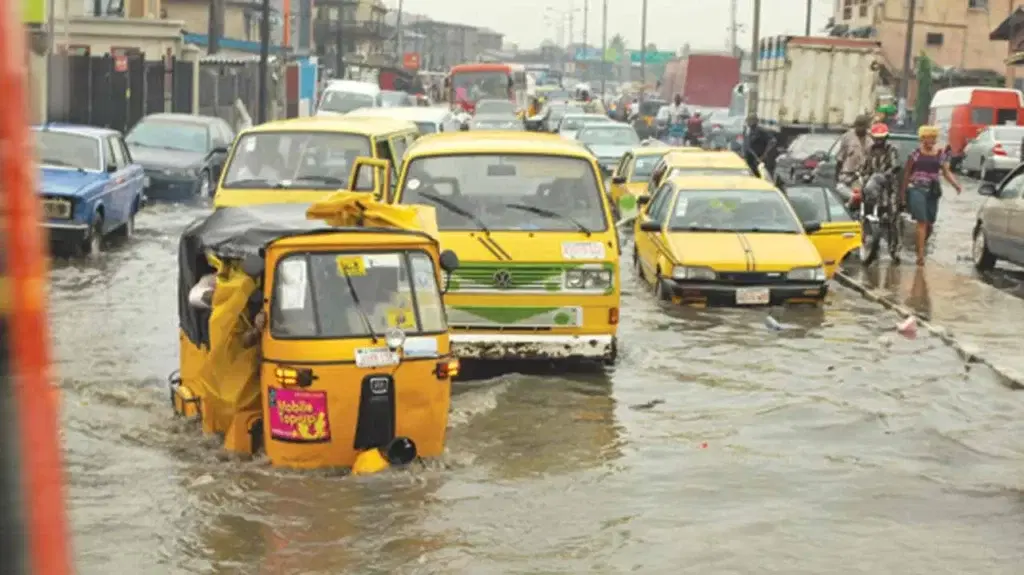
Filth & flooding: When indiscriminate dumping meets nature’s wrath in Lagos
By Prisca Sam-Duru
In many corners of Lagos, you don’t need to ask how the residents dispose of their refuse. The answer stares you coldly in the face. While a handful of people living in some estates enjoy the luxury of having their waste bins emptied on a regular basis by LAWMA or PSP operators, much of Lagos has become an extensive, open-air dump sites.
Read Also: Coastal Highway not responsible for Lagos flooding, lawmakers insist
From the bustling streets of Surulere to the residential quiet of Amuwo Odofin, Ojo, Lekki, and the chaotic environs of Oshodi, Mushin, Bariga, and Ikorodu, our roadsides are being suffocated with trash.
We now have a dirt competition. Are the roadside heaps worse than the refuse piles stealthily consuming uncompleted buildings and undeveloped plots in most virgin communities? The optics are devastating, but the real cost is far higher.
When the skies open up to perform its natural duty of supplying the earth with water just as they did relentlessly a few days ago, cities like Lagos do not just get soaked; they get trapped.
It has become normal in most parts of Lagos and many other Nigerian cities to see drainage channels blocked with plastic bottles, take-away packs, nylon bags, discarded household waste, and pure water sachets.
It’s disappointing that in spite of regular public awareness campaigns, many residents continue to dump refuse in gutters and other drainage channels while in some cases, people erect illegal structures on waterways or drainage corridors, thereby obstructing free flow of water through the channels and endangering lives of people in the communities.
Indiscriminate dumping of refuse has turned our drainage systems into a source of disaster. As the Nigerian Meteorological Agency (NIMET) warns of persistent, heavy rainfall, a collective fear has gripped residents. We may not just be battling the immediate effect of floodwaters but actually a looming public health disaster. Cholera, typhoid, and malaria, according to experts, thrive in stagnant floodwaters that swallowed the roads, people’s homes, and businesses during the last heavy downpour.
The aftermath of the torrential rainfall the past few days is haunting. Children and their teachers were unable to go to school, and many workers were stranded for hours due to the fact that the roads were covered by the floodwaters. Commercial drivers who couldn’t make it home before the rains began were trapped right in the angry flood. As we saw, life grinded to a chaotic halt in the affected parts of the state. Sadly, this is a recurring script.
Flooding is not exclusive to Lagos State. It has dealt with so many other states in Nigeria, including Anambra, Benue, Rivers, etc, as well as countries across the globe.
In 2025, the deadly flash flooding in the town of Mokwa Niger state took the lives of over 100 people while displacing no fewer than 3,000 people according to reports.
Also, the rainy season in 2022 was reportedly more disastrous as heavy rains resulted in deadly floods in many states, including Anambra, Borno, Ebonyi, Rivers, Bauchi and Benue. Several lives, properties, and farmlands were destroyed in the process.
According to a report by ReliefWeb, the worst and most devastating flood in Nigeria’s modern history took place in 2012. It was said to have lasted from July to October, affecting 30 out of the 36 states of the country, displacing over 2.1 million people while killing more than 300.
As Lagos state residents were wailing this past few days, viral videos showed Ghana also writhing in pain after flood over ran its cities. According to reports, Ghana is still grappling with the aftermath of the devastating torrential rains, which caused severe flooding in its capital city of Accra. Dozens were confirmed dead while hundreds of people were displaced.
However, from the devastating 2012 floods that displaced 2.1 million Nigerians, to the tragic losses in the town of Mokwa in Niger State last year, and of course the recent flooding in Lagos State, the message is clear: when we abuse our drainage and waterways, natural occurrence becomes source of tragedy and humans eventually pay a heavy price.
Amidst the weeping and the wailing, the crucial question remains: who is to blame? Is it the government or the people?
On social media, many residents point fingers at the authorities, citing poor urban planning and the abandonment of essential canal maintenance. A user Adewusib Esther reminisces about past administrations: “When Fashola was governor, you’d see agencies working on our canals throughout the year. It’s not just about pulling down buildings; it’s about cleaning the canals.”
Yet, others acknowledge the brutal truth of citizens’ bad behaviour. Another user, La Bi, puts it bluntly: “Flood is a natural phenomenon. It happens in almost every part of the world. We, the citizens, dispose of our waste in water channels and then blame the government.”
Olonade Oluwadamilare also wrote, “truly we are doing ourselves, but I can’t remember the last time PSP showed up to carry waste in our area here.”
Somehow, the flood crisis is often fueled by a disturbing paradox.
If everyone believes that Lagos state residents are at fault, why is indiscriminate dumping of refuse still rampant and fueling flood disaster?
Well, here is one of the reasons. I recently encountered a neighbour who, amidst laughter, recounted how she used the opportunity of the heavy downpour to flush her shop’s refuse into the gutter in front of the premises. Before I could challenge her, she admitted she knew it was wrong, noting that such action only ended up blocking the drainage at some point. She, however, justified her actions by claiming there was simply no proper means of waste disposal in our community.
This is the heart of the city’s tragedy: a situation that has turned most citizens into potential contributors to the city’s destruction.
For experts, a cocktail of factors, namely rapid population growth, climate change, crumbling infrastructure, and, perhaps most importantly, a stubborn refusal to change our habits, are fueling flood crisis in Lagos.
“Cleanliness is next to godliness,” the adage goes, but in Lagos, it has become a matter of survival. People seem just interested in hustling and surviving, paying less attention to their surroundings.
So, to move forward, we need more than just apologies and excuses from the government, or weeping, wailing, and regrets for or from victims of flood disasters. We need a robust waste management policy, the integration of technology for early warnings, and a genuine, sustained partnership between the government and the people.
It’s certain that infrastructure without a change in the people’s behaviour is merely a temporary solution to the problem.
Instead, until we stop treating our drainage channels as dustbins, the annual flood disaster will continue to hold Lagos hostage.
Vanguard News
The post Filth & flooding: When indiscriminate dumping meets nature’s wrath in Lagos appeared first on Vanguard News.