
“Terrorism, Not Religion”: Federal Government Rejects US Congress ‘Christian Genocide’ Claims
MAKOGI — The Federal Government of Nigeria has delivered a robust and factual rebuttal to the United States Congress, firmly rejecting allegations of a “Christian genocide” or state-sponsored religious persecution within its borders.
The official reaction follows the recent submission of a joint congressional report to the White House by the US House Committees on Appropriations and Foreign Affairs. The US report, triggered by President Donald Trump’s redesignation of Nigeria as a Country of Particular Concern (CPC), accused the Nigerian government of complacency in the face of targeted attacks on Christian communities and recommended severe sanctions.
However, in a comprehensive defense of Nigeria’s constitutional integrity, the Federal Government dismissed the “religious persecution” narrative as an inaccurate misrepresentation of the country’s complex security realities.
The Federal Government maintains that portraying Nigeria as the site of a “Christian genocide” is not only factually incorrect but also dangerous, as it risks inflaming religious tensions within the country. The administration remains resolute: the fight in Nigeria is a unified battle of a sovereign state against terrorism, and victory requires international support, not alienating sanctions.
The Official Stance: A Security Crisis, Not a Religious War
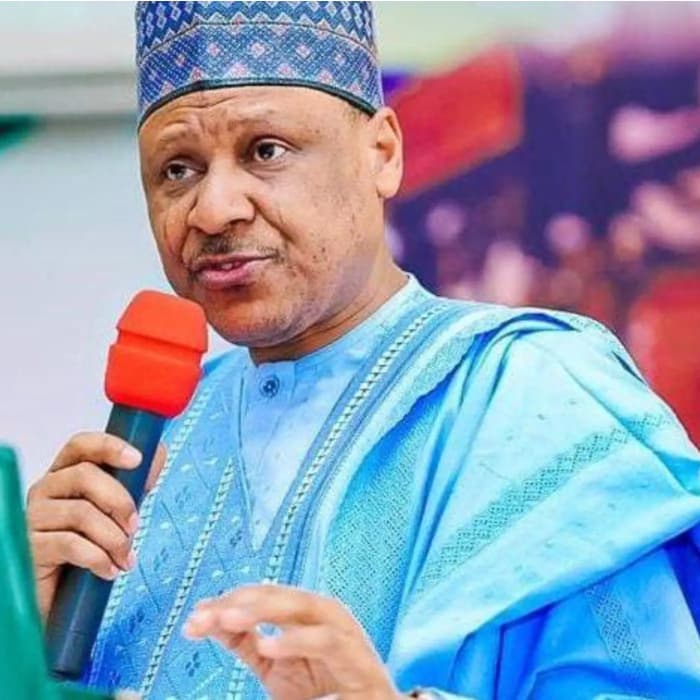
Minister of Information and National Orientation, Mohammed Idris, issued the government’s official response, making it unequivocally clear that Nigeria does not operate any policy that targets religious groups.
“It is important to state clearly that Nigeria does not have, and has never had, a state policy of religious persecution,” Idris declared.
The Minister emphasized that the violence gripping certain regions of the country is the work of opportunistic criminal elements, not religious crusaders acting with state backing.
The True Drivers of Violence: The government identified terrorism, organized criminality, banditry, and longstanding communal clashes over dwindling resources (such as land and water) as the root causes of the insecurity.
Equal Opportunity Terror: Authorities highlighted that terror groups like Boko Haram and ISWAP, as well as armed bandits, have indiscriminately slaughtered both Muslims and Christians, destroyed mosques alongside churches, and kidnapped citizens regardless of their faith.
Constitutional Protections and Ongoing Offensives
The Federal Government used the opportunity to remind the international community that the Constitution of the Federal Republic of Nigeria explicitly guarantees freedom of religion and worship for all citizens.
Rather than exhibiting “shameful indifference” as the US lawmakers alleged, the Tinubu administration outlined the aggressive military measures currently deployed to dismantle these terror networks:
Neutralizing the Threat: The military has successfully neutralized thousands of terrorists and rescued numerous hostages over the past year in highly coordinated offensives across the North East and Middle Belt.
Forest Guards and Surveillance: The government is actively deploying forest guards and enhancing aerial surveillance to deny safe havens to armed Fulani militias and bandit groups.
Humanitarian Efforts: The administration continues to invest heavily in the safe return of Internally Displaced Persons (IDPs) and community-based peacebuilding initiatives.
A Call for Constructive Collaboration, Not Sanctions
While the US report heavily pushed for funding freezes and targeted sanctions, the Nigerian government views the ongoing diplomatic engagement as an opportunity for genuine partnership rather than punishment.
Minister Idris stated that Nigeria values its strategic partnership with the United States but insisted that “any external engagement must respect Nigeria’s constitutional framework and sovereignty.”
Instead of weaponizing religion or oversimplifying the security challenges, the Federal Government urged the US Congress to focus on:
Intelligence Sharing: Providing actionable intelligence to help Nigerian forces preempt terror attacks.
Technical Assistance: Supplying advanced military hardware and border security technology to combat arms smuggling.
Constructive Dialogue: Engaging with Nigerian security chiefs—many of whom are Christians themselves—to understand the full, unbiased scope of the military’s fight against extremism.
The Bottom Line
The Federal Government maintains that portraying Nigeria as the site of a “Christian genocide” is not only factually incorrect but also dangerous, as it risks inflaming religious tensions within the country. The administration remains resolute: the fight in Nigeria is a unified battle of a sovereign state against terrorism, and victory requires international support, not alienating sanctions.