
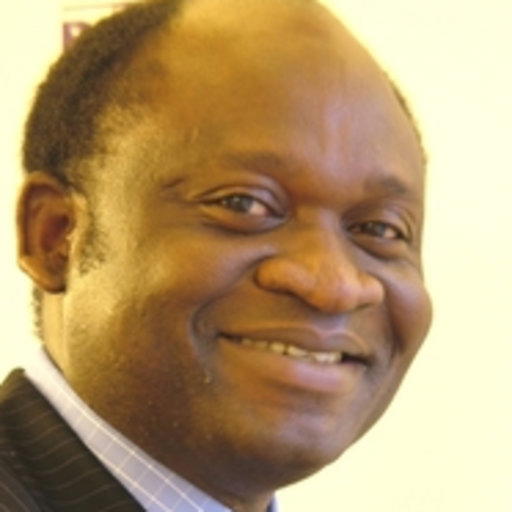
‘Fake’ agency: Tinubu’s amoral rule breeds impunity, abuse of power! By Olu Fasan
There is a shocking paradox, a bewildering moral hypocrisy, at the heart of President Bola Tinubu’s leadership. On the one hand, he is actively prosecuting previous public officers for corrupt practices, claiming to have secured over 7,000 convictions since he came to power three years ago. Yet, on the other hand, he presides over a moral cesspit, where ministers routinely abuse power and act with utter impunity, where some are so powerful they can literally get away with murder, protected by their fealty and sycophancy to the president, where governance is utterly devoid of transparency and accountability, and where conflicts of interest are so blatant, with a total blurring of public and private interests. These malfeasances are the subjects of this intervention, but we must start with the ongoing “fake” agency saga.
When the story broke recently, my first reaction was: where else in the world would such a thing happen? Where else would a “phantom” agency walk its way through the machinery of government and even penetrate diplomatic fortresses and yet have no legal basis for existing? Where else, except in mafia-run countries? Such a thing can only happen in a country that has reached a moral nadir, where the fish rots from the head down, where the ethos of public service and the norms of propriety in public office are totally non-existent.
Think about it. An agency called the Presidential Foreign Intervention Promotion Council, PFIPC, sprung up from nowhere, with one Prince Adeniyi Adeyemi as its director-general. The agency was invested with the whole panoply of a federal parastatal: it had an office at the Federal Secretariat; had civil servants working for it, with approval to hire more than 300 staff; opened accounts with the CBN; and had N1.3bn allocation in the 2026 Appropriation Act. But that’s not all. The agency’s DG had access to and interacted freely with the secretary to the government of the federation, SGF, the accountant-general of the federation, the head of the civil service and the budget office, among others. He also held meetings with foreign diplomats. Then, one day, the government said it knew absolutely nothing about the agency; it was “bogus” and its DG “fake”! President Tinubu was “outraged”and ordered the Independent Corrupt Practices and Other Related Offences Commission, ICPC, to probe the agency’s existence and unmask those behind it.
But I repeat: where else would such a thing happen: an entire arm of government emerging and operating freely with no one admitting to facilitating its emergence and operations? In the wholly unlikely event that a “fake” agency like the PFIPC emerged in the US or in Britain, would those countries’ leaders ask a state organ like the ICPC, controlled by the attorney-general, to probe such a matter in which top officials might be implicated? No, in Britain, there would be an independent judicial inquiry; in America, there would be a powerful and wholly independent Congressional hearing. Any public investigation of such a high-level malfeasance must be transparent and above board. But sadly, not in Nigeria!
For instance, while President Tinubu ordered the ICPC probe, he pre-empted its outcome by declaring his “100 per cent confidence” in Femi Gbajabiamila, his chief of staff, who allegedly signed the letter of appointment for the agency’s DG. Adeyemi said he paid a N400mn bribe to secure the appointment, but Gbajabiamila denied culpability and sued for damages. Yet, Nigerians deserve a genuinely open and transparent public hearing. But, earlier this week, when the ICPC started its investigation, Gbajabiamila’s lawyer, Jiti Ogunye, told journalists that his client was “grilled” by the ICPC and went back to his “duty post”in the Villa. But who witnessed the “grilling”? Would such “grilling” take place behind closed doors in America, Britain or, indeed, South Africa? Of course not. In those countries, transparency and accountability are hallmarks of governance, and no public officer is untouchable.
But President Tinubu has no time for such moral niceties. He will protect any minister, aide or official who is useful to him however putrid the allegations of impropriety swirling around them. It is inconceivable, for instance, that a British minister would be allowed to treat so lightly the mysterious death of someone in his home as David Umahi, Tinubu’s minister of works, appears to be handling the recent death of a nurse, Mary Habila, in his country home in Ebonyi. This is not a question of guilt or innocence, but there are standards of public life that no public officer should breach with impunity. However, abuse of power and impunity are thoroughly embedded in governance in Nigeria, with powerful ministers and officials routinely shielded from accountability.
So, truth be told, no one should expect the ICPC to name any politically influential official as a collaborator in the “fake” agency case, even though, as Babachir Lawal, a former SGF, told the BBC: “There must be connivance with officials within,” adding: “You must have officials within the system who will validate such corrupt behaviour.” But who are the officials involved in the PFIPC case? Well, all eyes are on the ICPC to tell Nigerians and, indeed, the world how the PFIPC came to be, how it enjoyed the paraphernalia of a full-fledged federal agency, and how its DG had such wide-ranging access and contacts within government and in the diplomatic community.
Which brings us to another pervasive malfeasance: conflicts of interest. In Nigeria, especially under the Tinubu administration, the lines between public and private interests are blurred, with public officers profiting from power. President Tinubu emblemises this phenomenon with the way he allows the perception of conflicts of interest to become entrenched under his rule, the way he treats the Nigerian state as a personal fiefdom by emblazoning his name on major public monuments, at least eight within just three years in power, the latest being the Lagos-Calabar coastal highway.
Last week, David Umahi, the beleaguered minister of works, announced that his ministry had decided to rename the coastal highway after Tinubu, calling it “President Bola Ahmed Tinubu Coastal Highway”. But why? Well, Umahi said Tinubu first conceived the project about 27 years ago when he was Lagos State governor. “This is one man who dreams and has the grace and divine mandate to actualise that dream,” he gushed. What a fawning sycophancy!
Note that present and future generations of Nigerians are lumbered with the N15trillion debt incurred, so far, to fund the construction of the coastal highway; note, too, that the contract was directly awarded to a company owned by Tinubu’s long-standing business partner, a company on which board his son reportedly sits; now, the same coastal highway is named after Tinubu himself. If there is any other definition of conflicts of interest, I have not seen it yet; except that, here, the conflicts of interest are utterly blatant and outrageously daring.
In genuine liberal democracies, such blurring of public and private interests, such conflation of public good with private gain, is frontally tackled and prevented through powerful transparency and accountability mechanisms, through robust checks and balances and through the force of civic norms. Sadly, such guardrails do not exist in Nigeria. As a result, President Tinubu runs a very opaque government that is not accountable for its actions.
Recently, the IMF said that public spending worth about 2 per cent of GDP, or N8.8trillion, was not recorded in government budgets, raising concerns about budget transparency and accountability. In a recent story titled “IMF joins backlash against ‘opaque’ loans with crackdown on Nigeria”, the Financial Times said the IMF questioned Nigeria’s use of opaque borrowing. Lack of transparency and accountability is a major problem under Tinubu’s rule.
But every leader is governed by his values. In truth, President Tinubu is utterly amoral. He puts efficiency above ethics. But such indifference to issues of propriety is a fertile terrain, a breeding ground, for abuse of power and other malfeasances like the “fake” agency scandal!
*Dr Fasan is the author of ‘In The National Interest: The Road to Nigeria’s Political, Economic and Social Transformation’, available at RovingHeights bookstores.
The post ‘Fake’ agency: Tinubu’s amoral rule breeds impunity, abuse of power! By Olu Fasan appeared first on Vanguard News.