
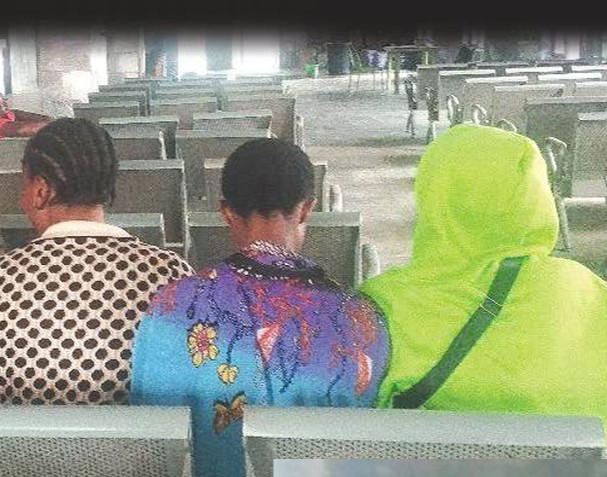
Even while pregnant, we were forced to sleep with clients, survivors recount sex trafficking
By Esther Onyegbula
For seven young Nigerian women, most of whom are teenagers, the journey began with familiar faces, including friends, relatives and community members.
They claimed to know people abroad who offers decent jobs in boutiques, restaurants, salons and homes. What awaited the young girls across the border, however, was a brutal reality. Theirs is a story of deception, coercion and exploitation.
Their rescue by the Global Anti Human Trafficking Organization (GAHTO), working with authorities in Mali, Burkina Faso and Nigeria’s National Agency for the Prohibition of Trafficking in Persons (NAPTIP), is more than a narrative of survival.
It is a chilling reminder of how human traffickers increasingly rely on trusted agents, relatives and acquaintances to lure vulnerable young people into modern-day slavery.
Hookup
For 22-year-old Sunday Sofia, known in Mali as “Testie”, the trap was carefully laid. Working as a maid and sales assistant in a Lagos boutique for N20,000 monthly, she dreamed of earning more to support her family and younger siblings.
When a friend introduced her to what appeared to be a better opportunity, she saw hope.
“It was one of my friends who told me she had secured another job for me,” Sofia recalled. “I accepted thinking it was a legitimate job. We were told we were going to work as housekeepers,” she said.
Instead, she found herself trapped in Mali.
Her story mirrors those of 17-year-old Blessing Samson, Esther Gyang and Odey Blessing, who were allegedly recruited through a network of agents who presented themselves as trusted helpers.
Blessing said a man identified as Peter approached them in their hometown in Plateau State with what sounded like a life-changing opportunity.
“He told us his sister had a business in Mali and needed people to work with her,” she said.
The girls were promised jobs in boutiques, restaurants and phone shops. They repeatedly sought assurances.
“We asked him if it was really the work he told us we were going there to do. We even asked if it was hookup work. He said no,” recalled Odey Blessing, known as “Beauty.”
Prostitution
The assurances were enough, they packed their bags, the moment the dream died. The illusion collapsed almost immediately after they crossed the border.
Upon arrival in Mali, the girls were taken not to boutiques or restaurants but to bars where other young women greeted them with a phrase they did not understand at the time.
“The following day, reality became impossible to ignore. They told us there was no boutique or phone plaza. They said it was prostitution, Odey said.
The girls cried, they pleaded, they begged. But they were told they had no choice.
One alleged trafficker reportedly informed them they owed 1.5 million CFA Francs each and could only repay the debt through sex work.
“They started starving us for three days, we had no option. What followed were weeks of exploitation, some of the us had to service multiple men daily while struggling to repay debts that seemed impossible to clear, Odey said.
According to Odey, there were no breaks, even during menstruation.
“Even when we were having our menstrual cycle, we still had to sleep with men,” she said.
Mad
Several of the girls recounted threats that they would go mad if they attempted to escape. Blessing remembered being warned repeatedly.
“Our madam threatened that we would run mad if we refused to work or escape,” she said. The threats were designed to exploit cultural fears and keep victims psychologically trapped.
Despite the intimidation, the girls quietly began planning their escape. Ironically, one of the people who eventually helped rescue the girls was someone they knew from home.
Sofia recalled meeting a man from their village who worked in Mali. “We knew him in our village before we travelled,” she said. “He knows us and he knows our parents. When he discovered our situation, he promised to help,” she added.
That intervention eventually connected the victims to GAHTO, setting in motion a rescue effort that would bring them back to Nigeria.
For Sofia, who spent two months in Mali, returning home felt like being given a second chance. “My greatest regret is travelling to Mali. I am happy to see myself in Nigeria. I won’t go back again,” Sofia said. Today, she hopes to return to hairdressing and complete the apprenticeship she abandoned in pursuit of a better life.
Domestic employee
Perhaps the most disturbing aspect of the rescues from Burkina Faso is how trust was weaponised.
20-year-old Augusta Akoghamhen said the recruitment began through a relative of her father.
The man allegedly assured the family that she would work as a domestic employee for foreigners and would travel by air.
Because the information came through someone known to the family, suspicion never arose. “My father agreed because he believed the job was legitimate,” Augusta said. The journey eventually took more than a week by road. When they arrived, the promises vanished. “They didn’t even allow us rest from the stress of the travel,” she recalled. “That same evening we were forced to start working. The work, I discovered, was prostitution. At the time, I was already pregnant. unfortunately pregnancy offered no protection,” she recalled.
For Augusta and her friend Elizabeth, pregnancy became another layer of vulnerability rather than a shield from exploitation.
Augusta said she was beaten whenever she resisted working. “Anytime I refused to work because I was not feeling well, my boss attacked me. Despite being pregnant, I was expected to continue servicing clients while handing over virtually all earnings,” Augusta noted. Elizabeth’s experience was similar.
“If they had told me it was prostitution, I would not have agreed to travel. My trafficker continued demanding work despite my advancing pregnancy. She said we would continue to work until we gave birth,” she said
“What shocked me most was discovering I had effectively become a commodity in a dispute between my boss, Osas, and her co-trafficker, Aisha. She refused and said except Aisha would buy me. I became a commodity for sale,” Elizabeth recounted.
Traffickers
The turning point came when Augusta secretly reached out to her father in Nigeria. The message triggered a chain of events that eventually reached GAHTO and National Agency for the Prohibition of Trafficking in Persons (NAPTIP).
GAHTO coordinated efforts leading to the rescue of Augusta and Elizabeth from Burkina Faso, after which they were received by NAPTIP’s Benin Zonal Command upon arrival in Nigeria.
For the five girls rescued from Mali, Sunday Sofia, Blessing Samson, Esther Gyang, Odey Blessing and Rose Pam, the intervention also brought an end to months of fear and uncertainty.
Most returned home with little more than the clothes they were wearing.
Some lost personal belongings
Others worked for months without compensation. Yet all returned with something more valuable: freedom.
These young women were not kidnapped by strangers lurking in dark corners. Many were recruited by people they knew, friends, relatives, neighbours and trusted community members.
The traffickers understood a painful truth: trust opens doors that force cannot. The girls’ stories exposed how false promises of jobs, education and prosperity continue to lure vulnerable young Nigerians across borders into exploitation.
Today, Sofia dreams of reopening her path to becoming a professional hairdresser. Others hope to return to school, rebuild their lives and reunite with their families.
For them, the journey home is a new beginning , and a powerful reminder that no promise of quick wealth is worth the price of freedom.
Statistics
According to NAPTIP, human trafficking remains a major challenge in Nigeria, with thousands of victims identified and rescued each year.
In 2025, it rescued over 370 Nigerian trafficking victims from countries including Ghana, Senegal, and other West African states, reflecting ongoing cross-border trafficking networks within the region. The agency also stated that many of these victims were intercepted through coordinated operations with foreign counterparts before full exploitation cycles were completed.
In the same year, NAPTIP disclosed that it secured 93 convictions of human traffickers and intercepted more than 2,500 potential victims of trafficking both within Nigeria and across borders, many of whom were being moved through recruitment scams targeting West African routes.
The post Even while pregnant, we were forced to sleep with clients, survivors recount sex trafficking appeared first on Vanguard News.