
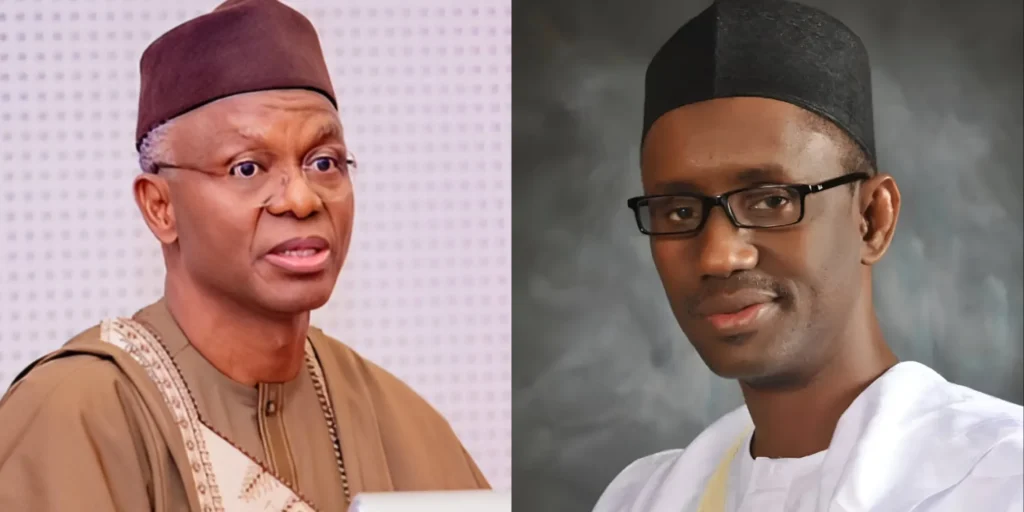
The “Mouth” Ate Its Owner: How Careless Boasting Finally Unravelled Nasir El-Rufai
ABUJA — In the murky waters of Nigerian politics, silence is often the ultimate survival strategy. But for Mallam Nasir El-Rufai, the former Governor of Kaduna State, silence has never been an option.
This week, as El-Rufai faces grueling interrogation at the Economic and Financial Crimes Commission (EFCC) headquarters in Abuja, political analysts are tracing his current ordeal not to his administrative records, but to his tongue.
Nasir El-Rufai is undeniably one of Nigeria’s most brilliant technocrats. He fixed Abuja and reformed Kaduna. Yet, as he sits in the EFCC interrogation room this February 2026, he is learning a harsh lesson: Competence builds a career, but character protects it. For El-Rufai, the mouth has always been a weapon of war. Unfortunately, in his battle for survival under Tinubu, he may have finally pointed that weapon at himself.
From the days of Olusegun Obasanjo to the current administration of President Bola Tinubu, El-Rufai has established a pattern: he works hard, but he boasts harder. And time and again, his “careless boasting” has provided the very rope his enemies use to hang him.
Here is how the “Accidental Public Servant” talked himself into trouble across four presidencies.
The Tinubu Era: The “NSA Bugging” & Religious Supremacy Boasts
The current crisis threatening to jail El-Rufai stems directly from two specific moments of hubris. El-Rufai lost his ministerial bid not because of incompetence, but because of a viral video. In the video, he was seen addressing Muslim clerics in Kaduna, boasting that the “Muslim-Muslim ticket” was a deliberate plan to permanently subjugate Christians in politics. That video became the primary “security report” evidence the Senate used to disqualify him. He boasted of a religious conquest, and it cost him his seat at the Federal Executive Council.
Just last week, in an interview on Arise TV, El-Rufai dropped another bombshell. He casually bragged that he had “bugged the phone” of the National Security Adviser (NSA), Nuhu Ribadu, and knew his secrets. This reckless admission of espionage against a sitting NSA gave his enemies the legal ammunition they needed. Within 48 hours, the EFCC invited him. As Femi Fani-Kayode noted this week: “If you can boast of bugging the NSA’s phone on national television, you make yourself a national security threat.”
The Yar’Adua Era: The “Dead or Alive” Boast
El-Rufai’s mouth was equally destructive during the Umaru Musa Yar’Adua administration (2007–2010). Forced into exile, El-Rufai did not go quietly. He engaged in a fierce media war with the ailing President. In a statement that haunts him to this day, El-Rufai famously said: “When you engage me in a battle, it is either I am dead or you are dead—and if you doubt that, go and ask Yar’Adua.” This comment, made after Yar’Adua’s tragic death, painted El-Rufai as cold and vindictive. It alienated the Northern conservative establishment, a bloc he has struggled to win back ever since.
The Jonathan Era: The “Body Bag” & Twitter War
Under Goodluck Jonathan, El-Rufai reinvented himself as an opposition fierce critic, but again, his rhetoric often crossed the line of decency. He famously tweeted provocative comments about the Chibok girls and insulted the person of the President, calling him “clueless” and mocking his wife. Although made later in 2019, his threat that foreign election observers would “return in body bags” exemplified the kind of violent, hyperbolic speech that terrified the diplomatic community.
These comments ensured that when power shifted, he had no goodwill left across the aisle. He burned bridges with the South-South and the international community, isolating himself regionally.
The Obasanjo Era: The “Pathological” Verdict
Even his political father, Olusegun Obasanjo, eventually tired of the talking. While El-Rufai served Obasanjo loyally as FCT Minister, the former President later penned a damning verdict in his book, My Watch. Obasanjo described El-Rufai as a “pathological liar” whose loyalty lasts only as long as it serves his interest. Obasanjo noted that El-Rufai had a penchant for “savaging the reputations” of others to elevate himself—a trait that eventually leaves one friendless.
Conclusion: A Giant Undone
Nasir El-Rufai is undeniably one of Nigeria’s most brilliant technocrats. He fixed Abuja and reformed Kaduna. Yet, as he sits in the EFCC interrogation room this February 2026, he is learning a harsh lesson: Competence builds a career, but character protects it.
For El-Rufai, the mouth has always been a weapon of war. Unfortunately, in his battle for survival under Tinubu, he may have finally pointed that weapon at himself.