
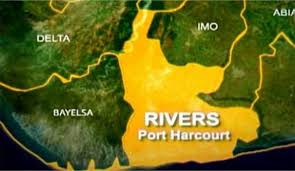
Dutch firm moves to end 60-year gas flaring in Rivers
….Says Nigeria has over 100 gas-flaring sites
By Daniel Abia, P/Harcourt
PORT HARCOURT — Dutch energy company, Energy Ventures B.V., has commenced moves to end gas flaring in parts of Rivers State and convert the associated gas into electricity and Liquefied Petroleum Gas, LPG.
The company said the initiative would initially target about five million standard cubic feet of gas currently being flared daily at Agbada 2 in Rivers State.
The Chief Executive Officer of Energy Ventures, Herbert Okibe, disclosed this on Monday during an inspection of the project site and a visit to the headquarters of the Port Harcourt Electricity Distribution Company, PHEDC.
Okibe, who led a delegation comprising the company’s Chief Financial Officer, Govert Rietema, and Chief Commercial Officer, Yvonne te Wierik-Chioke, said the project was designed to convert the gas into electricity or LPG for consumers in surrounding communities.
“What we are trying to do is to convert waste gas to sustainable energy for customers who have been underserved in these areas,” he said.
The Agbada project is being developed by Africa Gas Technology Company Limited, the Nigerian subsidiary of Energy Ventures, and is expected to serve as a pilot for similar projects in Nigeria and other gas-flaring regions globally.
According to Okibe, gas had been flared in the Agbada area for more than six decades, with environmental and public health consequences.
“This has been flared in this region for over 60 years. That is 60 years of polluting the environment, causing sicknesses and respiratory problems. What we are doing is a small step to correct that,” he said.
Okibe said Nigeria had more than 100 locations where significant quantities of gas were being flared, describing the challenge as part of a broader global problem.
“Nigeria is not unique to this problem. It is actually the seventh highest gas flaring country,” he said.
He said Energy Ventures hoped the Agbada project would demonstrate the technical and economic viability of converting flare gas into useful energy.
“We hope that this first project will be an example as a pilot to demonstrate both the technical and economic viability. Once that is proven, it will be the first of many other projects, not just in Nigeria but also around the world,” he said.
The project, estimated to cost tens of millions of dollars, is being financed through a combination of private and public-sector funding, including support from the Dutch Government and the Nigerian Government through the Midstream and Downstream Gas Infrastructure Fund.
Okibe commended the Federal Government for its efforts to reduce gas flaring through regulatory measures and the implementation of the Petroleum Industry Act.
He said the project had completed its Environmental Impact Assessment, which was approved by the Federal Ministry of Environment, while regulatory approvals had also been obtained from relevant midstream and downstream authorities.
He said the visit to PHEDC was aimed at advancing the electricity-distribution component of the project.
“With our visit today to PHED, we have gotten green light from the board to engage the Nigerian Electricity Regulatory Commission to get the permit to go ahead with the project,” he said.
On the construction status, Okibe said preliminary work had commenced, including fencing of the project site, while full construction would begin after the necessary construction permit was obtained.
He acknowledged that the project faced regulatory, contractual and commercial challenges, particularly over the planned supply of electricity to communities that have historically experienced unreliable power supply.
“There are always challenges with projects like this. There are many agencies to go through and there are many contracts to be put in place.
“We are not shying away from the challenges. The good news is that we are getting support not only from the government but also from the host communities,” he said.
The project is expected to convert gas currently treated as waste into electricity and LPG while reducing the environmental impact associated with prolonged gas flaring in the host communities.
The post Dutch firm moves to end 60-year gas flaring in Rivers appeared first on Vanguard News.