Fintech to the Rescue: How Cardoso is Using Nigeria’s ‘Sandbox’ to Fix Global Payments
ABUJA — Central Bank of Nigeria (CBN) Governor Olayemi Cardoso has sent a clear message to the world’s financial elite: the era of expensive, sluggish, and exclusive cross-border payments must end.
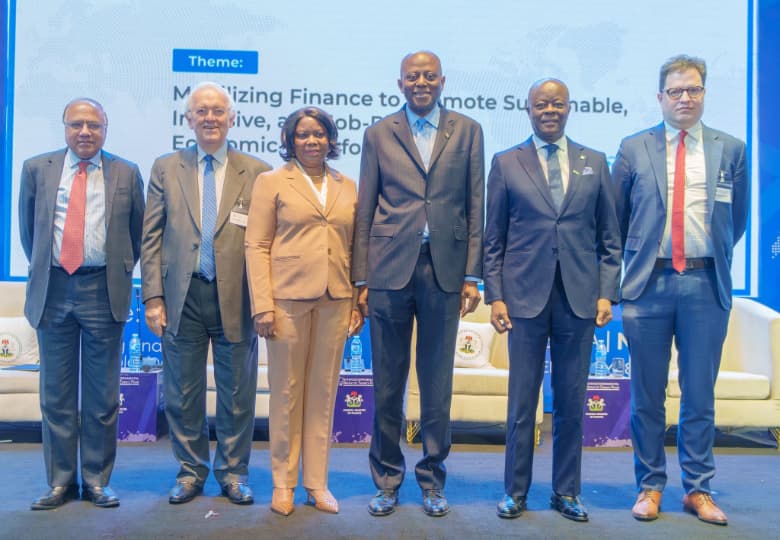
Speaking on Thursday, February 19, 2026, at the G-24 Technical Group Meetings (TGM) in Abuja, Cardoso argued that the current global financial architecture “taxes” the growth of developing nations through friction-filled payment systems. He called for a coordinated digital revolution to bridge the gap between emerging economies and global markets.
Under the theme “Mobilising finance for sustainable, inclusive, and job-rich transformation,” Cardoso revealed how Nigeria is already tearing down these borders to empower local businesses.
Cardoso concluded with a call to action for the G-24 members, urging them to stop acting as “bystanders” in the digital age. He reaffirmed Nigeria’s commitment to building a development-oriented global financial system that treats SMEs in Abuja with the same digital priority as corporations in New York.
The SME “Fast Track”: Cutting Red Tape
Cardoso highlighted a major win for Nigerian small businesses through the Pan-African Payment and Settlement System (PAPSS). The Policy: The CBN has officially slashed the paperwork for small-scale traders by introducing simplified KYC and AML requirements for low-value transactions. The Impact: This move allows Nigerian SMEs to move money across African borders instantly, bypassing the days of waiting and high fees that previously crippled intra-African trade. The Quote: “This has eased transaction processes for Nigerian SMEs by reducing paperwork and enabling faster, more seamless intra-African trade payments,” Cardoso stated.
Fintech: The “Regulatory Sandbox” Goes Global
The Governor positioned Nigeria as a global testing ground for the future of money. He revealed that the CBN’s Regulatory Sandbox is now prioritizing fintechs focused on secure, instant cross-border solutions. Innovation Without Chaos: Cardoso emphasized that while Nigeria is “embracing the next generation” of payments, it is doing so under close watch. The Strategy: “Our Regulatory Sandbox now allows payment-focused fintechs to test new cross-border solutions under close CBN supervision, ensuring innovation proceeds without compromising stability,” he explained.
The “Dual-Screening” Shield
While pushing for speed, Cardoso reassured the International Monetary Fund (IMF), the World Bank, and G-24 partners that Nigeria is not cutting corners on security. FATF Compliance: Nigeria has tightened its guardrails in line with Financial Action Task Force (FATF) guidelines. The Rule: Every cross-border transaction now undergoes strict dual-screening to block money laundering and terrorism financing.
Building a “Resilient Architecture”
Cardoso concluded with a call to action for the G-24 members, urging them to stop acting as “bystanders” in the digital age. He reaffirmed Nigeria’s commitment to building a development-oriented global financial system that treats SMEs in Abuja with the same digital priority as corporations in New York.