
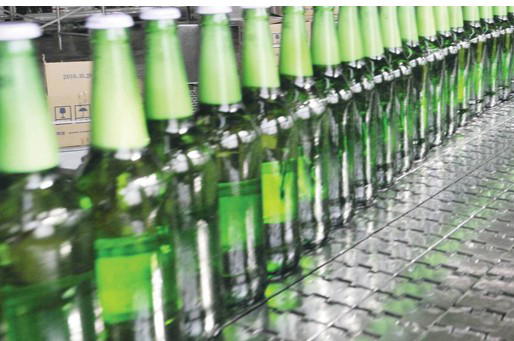
Breweries defy economic hardship, record sharp rise in revenue
…As profit rises 117% to N317.2 bn
•Our performance was led by Heineken beer – Nigerian Breweries •We take beer to ease frustration, stress – Consumers •It’s habit driven – Analysts •Helped by product re-pricing – Egbomeade
By Peter Egwuatu
Against the backdrop of rising costs of living and declining purchasing power, brewing companies have recorded sharp rise in revenues.
Filings by the companies to Nigeria Exchange Limited, NGX, indicate that leading brewers, Nigerian Breweries Plc, Guinness Nigeria Plc, International Breweries Plc, and Champion Breweries Plc recorded combined revenue of over N2.8 trillion from the sale of mainly beer and spirits, in addition to their non-alcoholic beverages in the year ended December 31, 2025, up from N1.89 trillion recorded in the corresponding period of 2024, representing an increase of 48.1%.
Analysts noted that the figure underscores the scale of beer and other alcoholic beverage consumption in Nigeria despite prevailing economic pressures.
According to the financial statements of the four major brewers profit was even more impressive with Profit Before Tax (PBT) rising 117.2 percent to N317.213 billion, up from N146.050 billion in 2024.
Meanwhile, the growth rate in revenue and profit were far higher than their cost of doing business despite the inflationary pressures in the economy.
The companies’ cost of sales rose 36.5% to N1.8 trillion from N1.3trillion, while administrative expenses rose by 17.6%, to N639.8billion from N544.04 billion.
Revenue generated
Nigerian Breweries Plc, the largest brewer, recorded revenue of N1.467 trillion for the period, up from N1.084 trillion in the corresponding period of 2024, indicating a 35.3% increase.
Guinness Nigeria followed as the second-largest revenue generator in absolute terms, posting N730.808 billion, up by 144.0% from N299.489 billion in 2024. International Breweries ranked third, posting N620.149 billion, up by 26.8% from N488.955 billion in 2024, while Champion Breweries recorded the least revenue of N29.797 billion, up by 42.6% from N20.890 billion in 2024.
Profit Before Tax
A breakdown of industry profit shows that Nigerian Breweries also topped the chart in absolute terms, posting N161.062 billion, though down by 11.9% from N182.917 billion in 2024.
Trailing Nigerian Breweries is International Breweries, which recorded N85.108 billion, improving from a loss of N111.820 billion in 2024.
Guinness Nigeria ranked third with N68.392 billion, declining by 7.2% from N73.679 billion in 2024, while Champion Breweries recorded N2.651 billion, up from N1.274 billion, representing a 108.1% increase.
Cost of sales/Operating expenses
Breakdown of cost of sales shows that Nigerian Breweries recorded the highest in absolute terms at N902.239 billion, compared to N764.520 billion in 2024.
Guinness Nigeria followed with N500.326 billion against N208.031 billion in 2024; International Breweries recorded N415.707 billion from N357.605 billion, while Champion Breweries posted N14.427 billion from N12.172 billion.
Similarly, operating and administrative expenses showed that Nigerian Breweries rose by 44.7% to N361.782 billion from N249.993 billion. Guinness increased by 104.2% to N141.496 billion from N69.288 billion. International Breweries recorded N131.649 billion, down from N222.428 billion in 2024, representing a 40.8% decline, while Champion Breweries rose to N4.829 billion from N2.328 billion, up by 107.4%.
CEOs’ comments
Commenting on performance, Chief Executive Officer of Nigerian Breweries, Thibaut Boidin, said: “In 2025, Nigerian Breweries achieved a significant turnaround, a return to profitability and a 35% revenue increase to ¦ 1.47 trillion. Driven by premiumization (led by Heineken), strategic pricing, and the integration of Distell, the company overcame 2024 losses, despite a volatile, high-inflation environment.
“The recovery wasn’t without its bumps. Cost pressures, cautious shoppers, and stiff competition dragged volumes down slightly, with the second half of the year noticeably softer than the first.”
For Guinness Nigeria CEO, Girish Sharma said : “The company reported a significant turnaround in profitability, moving from a N54.7 billion loss in the previous financial year to a net profit of N26.3 billion for the 15-month period ending September 2025.
“As of the 15-month period ending, we recorded a 99% revenue increase. It also reinforces the impact of the deliberate choices we’ve made to strengthen our business fundamentals and stay close to our consumers.
“Our ambition is clear to be one of the best performing, most trusted, and most respected consumer products companies in Nigeria.”
Analysts react
Analysts said the brewery sector’s performance reflects the resilience of Nigeria’s beer and beverages market, which continues to benefit from strong brand loyalty and distribution networks despite rising production costs and macroeconomic pressures such as declining purchasing power.
Commenting on consumer behaviour, Clifford Egbomeade, Economy and Communications Expert, said:
“The 48.1% revenue surge and 117% jump in profit before tax in 2025 are best understood as a confluence of pricing strategy, currency stabilisation, and base effects rather than a straightforward expansion in real consumption.
“The most significant driver was strategic price adjustment. Nigerian brewers, like most consumer goods manufacturers, repriced their products aggressively in 2024 and into 2025 to recover margins eroded by naira depreciation and imported input cost inflation.
“Since major brewing inputs such as barley, hops, aluminium for cans, and certain packaging materials are largely import-dependent, the naira’s steep devaluation from 2023 drove costs sharply upward. Brewers responded by passing a substantial portion of these costs to consumers.
“Revenue growth, therefore, reflects largely nominal expansion rather than volume growth.
“A second driver is base effect. 2024 was a particularly difficult year for the industry. Nigerian Breweries Plc posted a loss after tax of N149.50bn, International Breweries Plc recorded a loss of N112.81bn, and Champion Breweries Plc reported a near-negligible profit after tax of just N21.50m in the nine months to September 2024. “A recovery from such a depressed base makes the 2025 percentage improvements appear more dramatic than they might otherwise be.”
Continuing, he said: “On inflation easing, some contribution is plausible but should not be overstated. Headline inflation in Nigeria began moderating in the second half of 2025 following earlier CBN tightening, and this would have provided modest relief to consumer purchasing power.
“However, the industry’s own data cautions against interpreting this as a volume-led boom. Per capita beer consumption is actually reported to be declining, with affordability pressures driving consumers toward value-tier products and substitute beverages.”
On cost of sales, he said: “The 36.5% increase in cost of sales reflects the persistent structural vulnerabilities of Nigeria’s brewing industry.
“The sector remains heavily exposed to foreign exchange risk given its dependence on imported raw materials. While the naira showed some relative stability in 2025 compared to the sharp depreciation of 2023 and 2024, input costs remained elevated in naira terms. “Energy costs, specifically diesel for generators and industrial power, also remained a significant burden given Nigeria’s chronic electricity supply deficit, adding meaningfully to production costs across Nigerian Breweries Plc, International Breweries Plc, and Champion Breweries Plc alike.
“The 17.6% rise in operating and administrative expenses similarly reflects the broader inflationary environment, with wage pressures, distribution logistics costs, and marketing spend all increasing as brewers competed aggressively to protect market share.”
On behavioural patterns, Egbomeade added: “The evidence does support the view that beer consumption in Nigeria carries elements of psychological necessity, particularly as an accessible social lubricant and stress coping mechanism amid widespread economic anxiety.
“Nigeria’s high unemployment rate, cost-of-living pressures, and economic uncertainty create conditions in which affordable beverages, including beer and malt drinks, serve social-bonding and stress-relief functions that remain remarkably price-inelastic at certain consumption levels. This partly explains why volume consumption has remained resilient despite rising prices.
“That said, economists are right to distinguish between resilience and growth. What we observe is a market with entrenched consumption habits that generate growing nominal revenues, but real consumption gains remain constrained by declining disposable incomes and intensifying competition from non-alcoholic substitutes.”
Also commenting, David Adonri, Analyst and Executive Vice Chairman at High Cap Securities Limited, said: “Following the steady moderation in inflation rate in 2025, disposable income of consumers improved. Brewery products were natural areas where consumers channelled their funds to enjoy their easing life conditions. Secondly, the breweries were able to pass their high cost of production to the consumers.
“While there was little that the breweries could do about the cost of sales due to heavy import content, they succeeded in effecting cost recovery that impacted their operating expenses positively.”
Consumers speak
Mr Johnson Okorie, a beer consumer at Jayfield Hotel, Lagos, said:”Some of us drink beer as a way of easing frustration and coping with stress brought on by harsh living conditions in the country. We don’t mind how our income is affected by inflation, we still consume a few bottles of beer to help calm down and strategise better.”
Another man, identified as Babatunde, said: “Many of us here in Lagos and other parts of the country continue to spend scarce resources on beer and other alcoholic beverages, as a habit that offers us temporary relief from daily pressures.”
A lady, Kikelomo Adebayo, at Base Hotel in Surulere, said: “Drinking beer makes me think less about this economy. Alcohol, in particular, has become a coping mechanism for stress, unemployment, and uncertainty. No matter the hike in price, many of us will still consume our beer.”
The post Breweries defy economic hardship, record sharp rise in revenue appeared first on Vanguard News.