
AMASEIKUMOR 2026: Splendour of culture, dance of the gods in Delta
By Akpokona Omafuaire
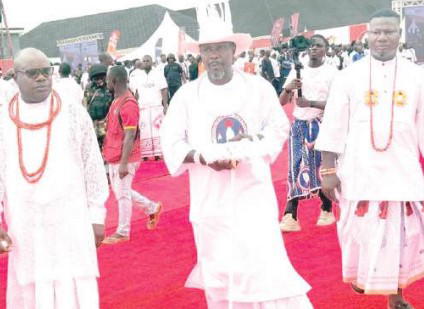
Splendour, artistic brilliance and spectacular display were the hallmarks of the Amaseikumor festival which was held in the sacred Egbesu Temple in Oproza town, Gbaramotu Kingdom of Delta state from April 6 to April 11.
The festival was more than just an event, but a celebration where history, mythology and human creativity converged. It brought together renowned Ijaw artists and dancers as well as an international audience who were eager to witness the sacred rites, mythical performances and the celebration of the gods through mesmerizing dances. It was indeed a living testament to the enduring power of cultural preservation.
Seven days of spiritual rendezvous
Seven days after the ritual of cleansing, dancers, singers, and drummers flagged off the festival invoking the presence of the deities. The Oweigbele—men of extraordinary spiritual power—armed with sacred passwords known only to the Akparans and Kolokolowei (adherents) stretched forth to pray at the waterfront. They then returned to lay down their swords of authority before the Egbesu-Ware shrine (Egbesu Temple).
As they returned, Agadagba, seated on white chairs, adorned with eagle feathers upon his sacred crown, presided as custodian of the ancient Urubasian people—the Ijaw nation.
White rams were offered as drinks were poured. Petitions were raised through ritual prayers. Those who came to redeem vows stood in reverence. And those who had committed hidden wrongs—against man or woman—were spiritually arrested by Egbesu, compelled to confess and seek forgiveness, lest they face the wrath of the divine.
As explained by an insider, Enaibo Asiaye, the first ritual was the pouring of libation to Gbaraun Opuaduwe ware in Oporoza. Offerings were made to the ancestors—those who lived, conquered, and departed. Then to the Kaladuwe—the innocent spirits who came to earth and returned in their pure state.
Those who ate from these consecrated offerings received blessings—freedom, health, prosperity, children, and fulfillment of destiny. Each day was dedicated to different deities.
Opuaduwe opened the spiritual gates—inviting all realms to witness and bless the people. Then came Ibolomobo-Ere, the mother goddess—source of love, light, and nurturing. Her rites prepared the path for all other deities.
Then came the day of Egbesu—the supreme force of Ijaw spirituality and the embodiment of justice, protection, power, and identity. Before the Ark of Egbesu at the waterfront, prayers connected heaven, earth, and water simultaneously.
According to history, Egbesu-Egba is a rare phenomenon—seen only by the spiritually chosen. That revelation, once hidden, was made known through Tompolo, the divinely prepared vessel.
On the final day of offerings, signs appeared. The waters moved unusually. Clouds shifted in eclipse-like patterns. White eagles circled the sacred forest. Elders knew—but remained silent. The arena was purified by aged women dressed in white. Something was coming.
As the Amaseikumor approached the arena led by Tompolo, the drums spoke and the spirits gathered once more. The call was made that the Ijaw people should return to their roots. For in culture lies identity. In tradition lies power. And in Egbesu lies protection, justice, and destiny.
A grand tradition of dance and devotion
Amaseikumor’s dance of the gods, the centerpiece of the festival, draws its inspiration from age-old rituals and ceremonies that honor deities and spirits of the earth, sky, and sea.
Rooted in the ancient Egbesu mythology, these dances are said to invoke the presence of gods themselves, as performers channel divine energy to bring forth powerful messages of love, unity, and transcendence. Through intricate footwork, rhythmic drumming, and vibrant costumes that symbolize everything from harvest to warfare, the dancers would transport the audience into a realm where time and space dissolve, and the line between the human and the divine becomes almost indistinguishable.
A gathering of cultures
Amaseikumor 2026 was a global gathering that highlights the world’s diversity. This year, the festival expanded to feature free medical outreaches, football tournaments involving other kingdoms, with performances that reflected the ancestral stories, spiritual beliefs, and artistic expressions of various indigenous groups and contemporary artists. The festival has transformed into a true global cultural crossroads. The festival also hosted a retinue of top politicians, captains of industries and kings from various kingdoms as over forty federal lawmakers attended with Speakers of six State Houses of Assembly.
At the closing ceremony, His Majesty Oboro Gbaraun II, JP, Aketekpe/Agadagba, the Pere of Ancient Gbaramatu Kingdom played host to different monarchs across Delta State, Chiefs in regal attire, community leaders, and cultural custodians who gathered in unity, marking the end of the festival with prayers, blessings, and celebrations.
It was a moment of reflection and renewal—a reaffirmation that despite the tides of change, the spirit of Gbaramatu remains anchored in its traditions.
As the drums slowly faded and the crowds dispersed, one thing was clear: Amaseikumo is not just an event. It is the soul of a people—alive in every chant, every dance, and every sacred rite.
Calls for renewal of Tantita’s pipeline contract
Senator Joel-Onowakpo Thomas, representing Delta South Senatorial District, during the event kicked against calls to split the pipeline surveillance contract among multiple contractors, warning that such a move would trigger a resurgence of crude oil theft.
“All those advocating that the pipeline contract should be divided among so many people do not have the country’s interest at heart. Once they do that, bunkering will return with full force,” the Senator said. He spoke during an interview with newsmen at the grand finale of the 2026 Amaseikumo Festival. Also, High Chief Michael Johnny, an All Progressives Congress (APC) chieftain in Delta State who also spoke with the press during the festival, described Tantita Security Services as “God-sent” for its role in protecting Nigeria’s oil assets and reviving the national economy. Johnny said the company’s intervention has reversed decades of economic sabotage.
“Tantita is God-sent to empower and rebuild the Nigerian economy that has suffered for decades,” he said. He noted that since the removal of fuel subsidy, revenues from oil and gas have been better secured under Tantita’s surveillance. “The funds coming from the oil and gas sector are now being guided and protected by Tantita. That is why all state governments, not just those in the Niger Delta, are benefiting from its hard work.”
Before Tantita’s engagement, Johnny explained, the country lost billions of naira and dollars annually through pipeline vandalism and crude oil theft. “For years, billions of dollars and naira were siphoned through our pipelines. It became difficult for the Federal Government to meet its obligations, which is why we resorted to constant borrowing”, he said.
He maintained that the country is now on a better trajectory. “Since the establishment of Tantita, the country is moving in the right direction, in line with our plan that Nigeria must grow and that Nigerians must live well.”
The post AMASEIKUMOR 2026: Splendour of culture, dance of the gods in Delta appeared first on Vanguard News.