
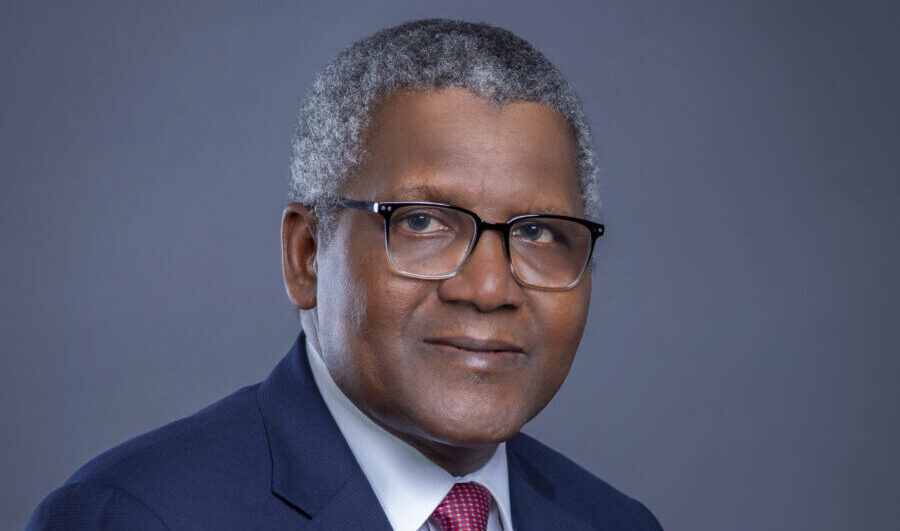
Aliko Dangote, Nigeria’s truest capitalist? By Suleiman A. Suleiman
(suleimansuleiman@dailytrust.com; 07066451983 SMS)
Nigeria has a complicated relationship with capitalism. For the most part, it is barely understood. In Nigeria, capitalism is often presented as something inherently bad. This draws from the residual legacy of Nigerian Marxism, and a religious ethos that sometimes viewspoverty as a moral trophy. The idea that “money is the root of all evil” remains one of the most popular sayings in our public culture, even though money clearly also does so much good.
Nigerians also tend to privilege money above all else, and thus understand capitalism simply as personal accumulation of money. This partly explains why trading, rent-seeking, and briefcase “contracts” remain the predominant forms of ‘business’ activities. Most crucially, we seem to think that the primary purpose of money is to spend it on luxury: mansions, expensive cars, private jets, and anything that elicits that “I pass my neighbour” feeling.Money, not creative labour by which it is generated or preserved, is the most celebrated thing in Nigeria.
There are profound consequences for these ambiguous relationship with capitalism, and we suffer them every day in our politics, economy and society, not least an extreme materialism whereby money defines nearly all relationships, and is implicitly or explicitly transacted even wholly ethical contexts like voting, law enforcement, filial relationship, neighbourliness, and even pastoral care by traditional and religious leadership. Moreover, our failure to properly understand capitalism at academic, policy and popular levels has meant an inability to develop anything beyond primitive capitalism. Nigeria has never truly been able to develop a genuinely domestic capitalism on a scale large enough to sustain the world’s sixth most populous country. We have dozens of groceries across nearly every street in every town or city, for example, but not a single Walmart or Sainsbury’s. And similar examples abound across all sectors.
This is so in part because we have not thought to institutionalize wealth creation and preservation on a large scale. How many venture-capital companies do we have to invest in start-ups across all sectors? How many patents do we licence per year? How much do we spend collectively on research and development? How many proper business schools do we have here? How many truly large-scale or multi-national companies? Where is Nigeria’s truly serious, realistic and long-term industrial policy? Where is the capacity of the state and government to faithfully implement it? What is the state of our corporate governance, labour and inheritance laws? The list is not exhaustive, off course. But these are the institutions and institutional mechanisms that generate wealth on a large scale and preserve it for the long term.
Unfortunately, lacking most of these things, Nigeria remains abjectly poor and unable to preserve wealth for the long term, despite the presence of thousands of “rich people”. When I was growing up in the early 1990s, we heard tales of wealthy families like the Abiolas, the Dantatas, the Maidaribes, the Nzeribes, and so on. Most of these have gone under by now, whereas, elsewhere, some of the wealthiest families 200 years ago remain so today, and the whole society benefits from their wealth in jobs, taxes, the things they produce, and what not.
The point is not to romanticise capitalism but to clarify it since a country of 230 million people cannot attain development under our persistent primitive form of capitalism. As I chose to clarify it here, capitalism as is about wealth accumulation through production, and about wealth preservation through institutionalization. The capitalist will get rich, yes, but they would do so by producing something, by creating and preserving value, and by solving problems and meeting the needs of a large enough number of people. We understand money and accumulation in Nigeria, but not enough of production, preservation or institutionalization that are core to a capitalist economy and culture. My argument today, therefore, is that we must bring all these things back in when we think or talk about capitalism in this country.
This is what makes Dangote, and what he is trying to do here in Nigeria, important. For me, Dangote represents the closest thing we have to a true capitalist in this sense of wealth accumulation through production. Dangote has been in business since 1977, and his career has followed three phases. He began as a trader, that is, essentially as a middleman between those who produce and those who consume. He then transitioned to the “accumulation through production” phase in the early 2000s as a leading beneficiary of the government’s privatisation programme. With his Dangote Refinery and other business in the Group, he is now effectively not just a producer of things himself, but a builder of big businesses from scratch.
According to reports, Dangote was worth $3.3 billion when he first appeared on the Forbeslist of richest people in 2008. Today, Bloomberg reports his total worth at $35.5 billion. This means that he is worth more than ten times today than he was in 2008. In other words, he has accumulated more wealth at a shorter pace because he has produced more of the things we all need, from sugar and cement to refined petroleum. How many of those politicians and so-called businessmen who bought off previously state-owned enterprises have been able to turn them around and add value to them, let alone build new large-scale ventures from the start?
The point is not to fantasize a single individual, but to hold them up as a model of true capitalism, of wealth accumulation through production, value creation and problem-solving on a large scale. Consider, for example, the Dangote Refinery, the largest of its kind in the world. This project is much more than private capital since it not only adds value to our energy sector, it also has multiplier effects across other sectors and significant impact on our national GDP. Moreover, by giving Nigerians a direct stake in the refinery, it insures against any punitive or rogue governments—and we always have one around the corner in this country—which might seek to derail the entire project for their own selfish ends. Public ownership of the company is a mechanism by which the refinery can be preserved over the longer term.
Indeed, even the story of how the refinery was built from scratch to the first gush of refined fuel against all odds right here in Nigeria should itself be case study in our business schools. Future large-scale entrepreneurs could learn something from Dangote’s experience building the refinery from the ground up. And if we are wise, then the Dangote story must be properly documented in biographies, books, and academic articles. These are by themselves important forms of production, value addition, and collective capital for the society as a whole.
Finally, is also an entire value system in its own right, and one of its most prized values is the personal discipline of the capitalist. The truest capitalists know that the real value of money, is not conspicuous consumption but for more and more value creation that preserves their own wealth beyond their lifetimes, and also help to lift the entire society along with them. Some of the richest persons of all time belong in this category. In a country where moneybags spend their fortunes on luxury and comfort, Dangote, along with just a few others, is in a class of his own in his personal discipline and frugality. And that too must be documented and passed on.
In sum, the capitalist has done his part, and it is left for the state to rise to the occasion by acquiring the capacity needed not only to enforce sound policies and regulations to help preserve capital and wealth, but also for making capitalist enterprise better serve the country at large. The biggest challenge of development in Nigeria has always been how to create a truly capitalist class, to develop and entrench a widespread entrepreneurial culture, and how to shift from a predominantly informal and precapitalist production to capitalist productionon a large scale. In order words Nigeria’s challenge is how to create dozens and dozens of Dangotes right here at home. We now have a living model with which to start. This is the whole point today.
The post Aliko Dangote, Nigeria’s truest capitalist? By Suleiman A. Suleiman appeared first on Vanguard News.