
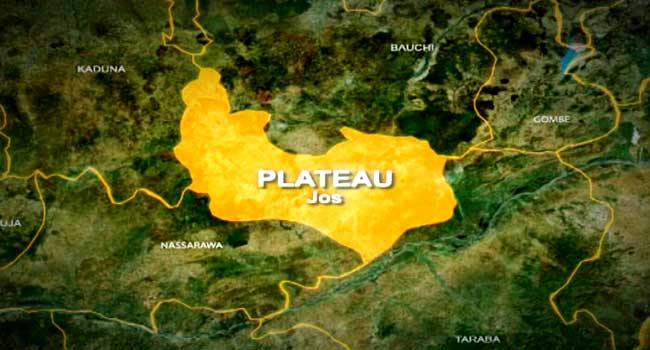
23.2% of Plateau children out of school, govt mulls sanctions for parents
By Golok Nanmwa
Plateau State Government has expressed concern over the growing number of out-of-school children in the state, revealing that 23.2 per cent of school-age children are currently out of the classroom.
The government said it was considering stricter measures, including sanctions for parents who fail to enrol their children in school, as part of efforts to reverse the trend.
The Commissioner for Education, Mrs. Kachollom Gang, disclosed this during an advocacy campaign on the activities of School-Based Management Committees, SBMCs, organised by the Plateau State Universal Basic Education Board, PLSUBEB, in Jos.
Describing the situation as a major concern, Gang attributed the increasing number of out-of-school children to insecurity and other socio-economic challenges confronting the state.
“The issue of out-of-school children has become a menace. Insecurity across the country has contributed significantly to the growing number of children who are not in school, and Plateau is no exception,” she said.
She said Governor Caleb Mutfwang had remained committed to repositioning the education sector but noted that more needed to be done to reduce the number of children outside the school system.
“The governor has done everything possible to encourage education in the state, and I believe he will continue to do more because he is deeply concerned about the increasing rate of school dropouts,” she said.
The commissioner commended School-Based Management Committees for complementing government efforts and urged them to intensify grassroots advocacy by identifying children who were not in school and encouraging their parents to enrol them.
She disclosed that the Ministry of Education was considering tougher policies to compel parents to send their children to school.
“As a ministry, we are looking at introducing stringent measures that will encourage or compel parents to ensure their children are in school.
“We will continue to work with traditional rulers, religious leaders and development partners to make this a reality,” she said.
Lamenting the decline in educational standards, Gang said Plateau had lost its place as one of the leading states in education.
“There was a time Plateau was regarded as the leading state in education in Northern Nigeria. When we came into office, Plateau was ranked 33rd among the 36 states.
“We have made some progress, but we are determined to restore Plateau to its rightful position,” she added.
Earlier, the Executive Chairman of PLSUBEB, Mr. Sunday Amuna, said tackling the out-of-school children crisis required the collective efforts of government, communities, traditional rulers, religious leaders and civil society organisations.
He warned that children who remained outside the classroom were vulnerable to criminal activities and other social vices.
“Any child of school-going age who is not in school will certainly find something else to do, and such activities may not be beneficial to society. Communities must therefore take ownership of this challenge,” he said.
Amuna urged communities to discourage child hawking, illegal mining and other activities that deprived children of education, adding that parents who deliberately kept their children out of school should be held accountable.
He disclosed that the state government, in partnership with the Universal Basic Education Commission, UBEC, had provided funds under its Annual Basic Education Action Plan for the training and retraining of School-Based Management Committee members to strengthen grassroots mobilisation.
Also speaking, the UBEC State Coordinator, Mrs. Esther Tells, described School-Based Management Committees as a critical link between schools, government and host communities.
She said Nigeria accounts for one of the highest numbers of out-of-school children globally, with about 18.5 million children outside the school system.
According to her, Plateau has an out-of-school children rate of 23.2 per cent, with school enrolment standing at about 65 per cent, while the dropout rate exceeds 28 per cent.
She expressed optimism that empowering School-Based Management Committees would significantly improve school enrolment and reduce the number of out-of-school children in the state.
The Plateau State Chairman of the School-Based Management Committees, Mr. Davou Terry, identified insecurity, illegal mining, child labour and early marriage as major factors responsible for the growing number of out-of-school children.
He said findings from community engagements across the state showed that many children had been displaced by insecurity, while others abandoned school to engage in mining, domestic work or early marriage.
“We have continued to engage traditional rulers and community leaders to ensure that more children return to school. This advocacy will not end here. We will continue to visit communities and schools until every child of school-going age is back in the classroom,” he said.
The advocacy campaign brought together government officials, education managers, development partners, traditional rulers and members of School-Based Management Committees to strengthen grassroots participation in addressing the out-of-school children challenge in Plateau State.
The post 23.2% of Plateau children out of school, govt mulls sanctions for parents appeared first on Vanguard News.